Powering the Big Apple
September 23, 2026
A new source of renewable energy now lights the city that never sleeps.
Some of the electricity that powers homes and businesses across New York City begins hundreds of miles away in Québec. Before it reaches the city’s electrical grid, it travels underground and in major waterbodies from Canada across New York state. For more than three years, Kiewit crews helped build the land-based portion of that path.
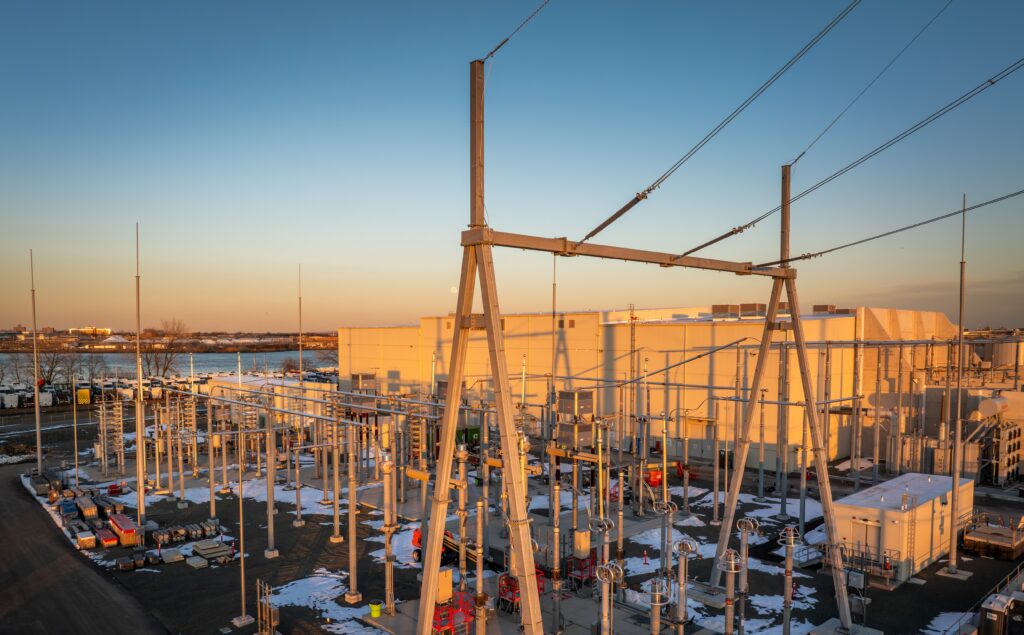
Across New York state, crews installed approximately 147 miles of underground transmission line through farmland, wetlands and railroads. In Queens, another team built the Astoria Converter Station, where the power is converted from direct current (DC) to alternating current (AC) before entering the grid.
Together, those projects made up Kiewit’s scope on the Champlain Hudson Power Express (CHPE). The 339-mile underground and underwater transmission system delivers 1,250 megawatts of renewable hydropower from Hydro-Québec to New York City — enough electricity to power more than 1 million homes while strengthening grid reliability and supporting the state’s clean energy goals.
For Kiewit, CHPE marked the company’s first high-voltage direct current (HVDC) project in the United States, a first-of-its-kind effort that would require new ways of planning, designing and building.
Years in the Making
As New York worked to reduce its reliance on fossil fuels and electricity demand continued to grow, the state sought a renewable energy solution that could deliver large amounts of power reliably without adding more overhead transmission lines. CHPE offered a different approach, moving hydropower from Québec to New York City through a fully buried and underwater system.
The path to construction took years, and Kiewit had been involved with CHPE long before crews broke ground. The project evolved through multiple rounds of estimating, engineering and planning before moving into construction. By the time work began, the route had been refined, more than 1,000 third-party stakeholders had been engaged and years of coordination had laid the groundwork for installing 556 cables averaging 3,500 feet in length.
Building the Line
One of the team’s first priorities was determining where work could start. The 147-mile transmission route was divided into five construction areas, with the original plan calling for crews to work linearly from Whitehall in upstate New York to Queens in New York City. Before work could begin in any location, however, the team had to make sure all approvals were in place.
The transmission route crossed a wide variety of landscapes, each with its own requirements. Easements had to be secured, environmental requirements had to be met and railroads, utilities and other stakeholders all had a role in determining when a section was ready for construction.
“We developed what we called a ‘Go-No-Go Tracker’ that broke the alignment length into wire pull sections,” said Jeff Jones, Kiewit area manager. “It identified areas of work where we had the necessary easements, agreements and third-party approvals in place to complete an entire wire pull so crews could work efficiently.”
Instead of progressing linearly from north to south, crews worked wherever the project was ready.
“It became like a quilt,” Pierre Adam, Kiewit operations director, said.
As one section opened, crews moved in. If another was delayed, Kiewit shifted people and equipment elsewhere. The plan evolved almost daily, allowing work to continue while the owner obtained access to other parts of the route.
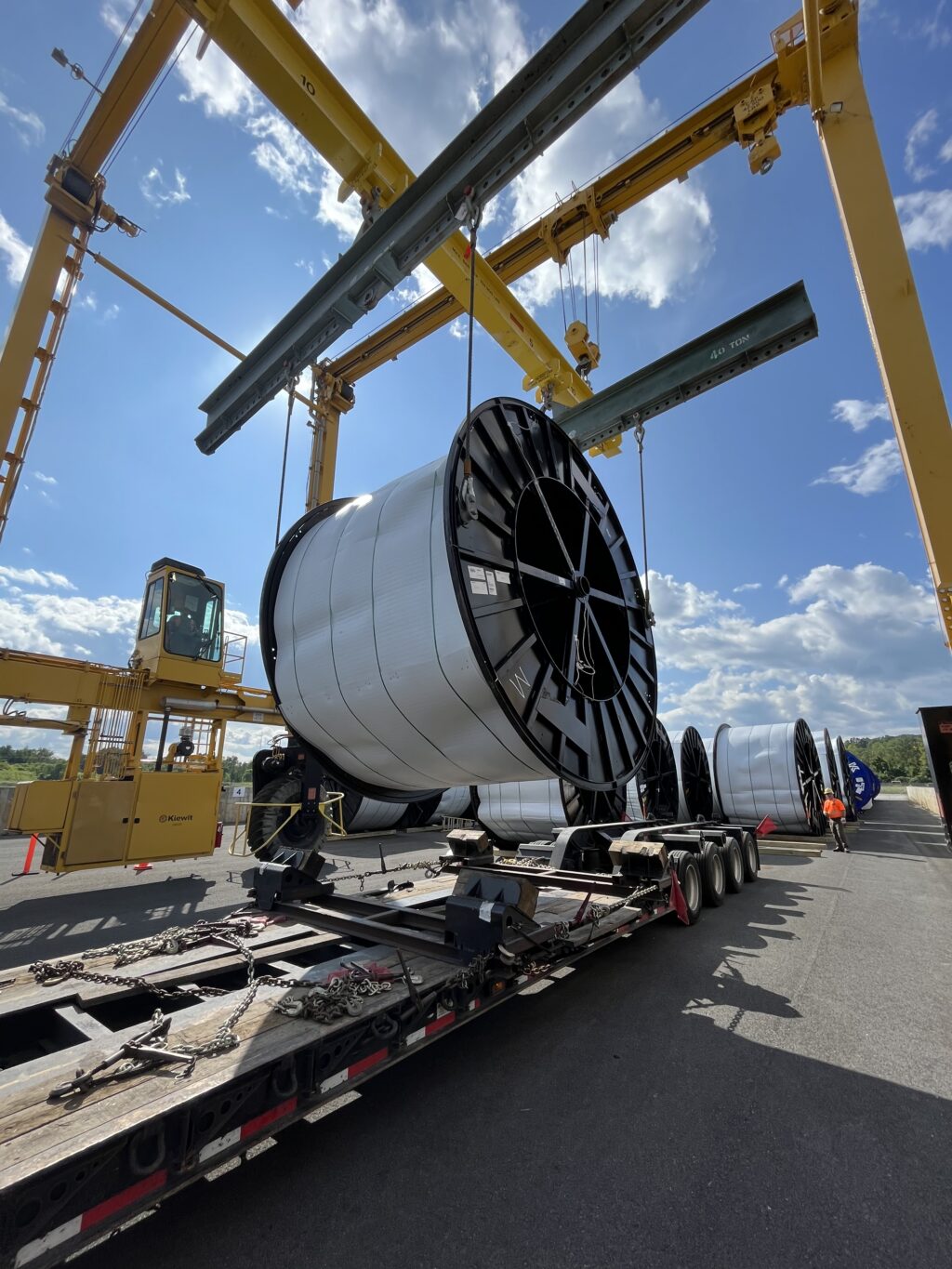
“One aspect of the project many people don’t realize is that the land portion of the transmission line is not in easily accessible areas, so the team built (and removed) 105 miles of heavy haul access roads to get thousands of dump trucks, concrete trucks, 80,000-pound cable reels and personnel vehicles to the work,” said Travis Church, Kiewit project director.
Construction installation methods varied according to geographic location and site-specific constraints, including environmental conditions and proximity to existing infrastructure. In some areas, crews installed the underground conduit using traditional trenching. In others, they relied on horizontal directional drilling (HDD), a trenchless construction method that allowed conduit to be installed beneath the surface while minimizing disruption above ground. Across the project, Kiewit and four HDD subcontractors completed more than 300 HDD crossings totaling nearly 400,000 feet.
Every section required multiple solutions. Environmental specialists identified work restrictions before construction began while engineers, field teams and partners coordinated how each section would be built.
“It took a team committed to communicating early and often to successfully plan and execute the design intent,” said Scott Prugh, Kiewit design engineering manager.
Despite a delay of approximately a year and two years of continually changing conditions, the team completed construction more than a month ahead of schedule and the owner was able to achieve commercial operation months earlier than planned.
“CHPE was a project of coordination and collaboration,” said Church. “We managed hundreds of third-party stakeholders and overcame massive access delays. It took teams with the patience and grit to plan and re-plan their work based on what was available instead of where they wanted to go. We also helped the owner finish developing the project as it was being built so they could achieve the commercial operation date they had promised the state of New York.”
Converting the Power
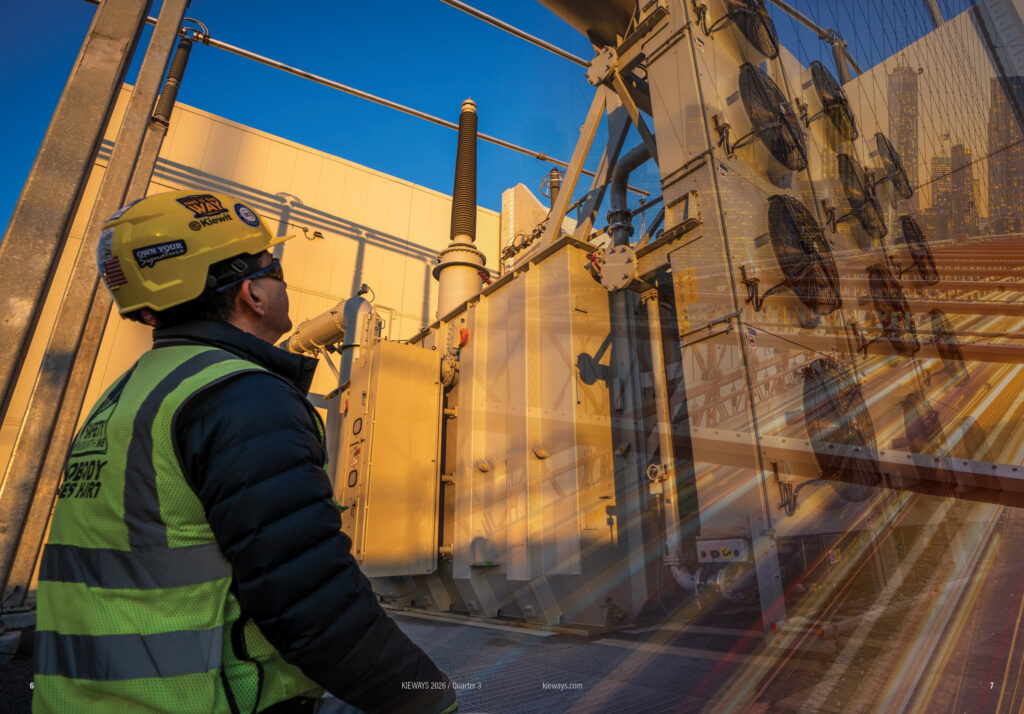
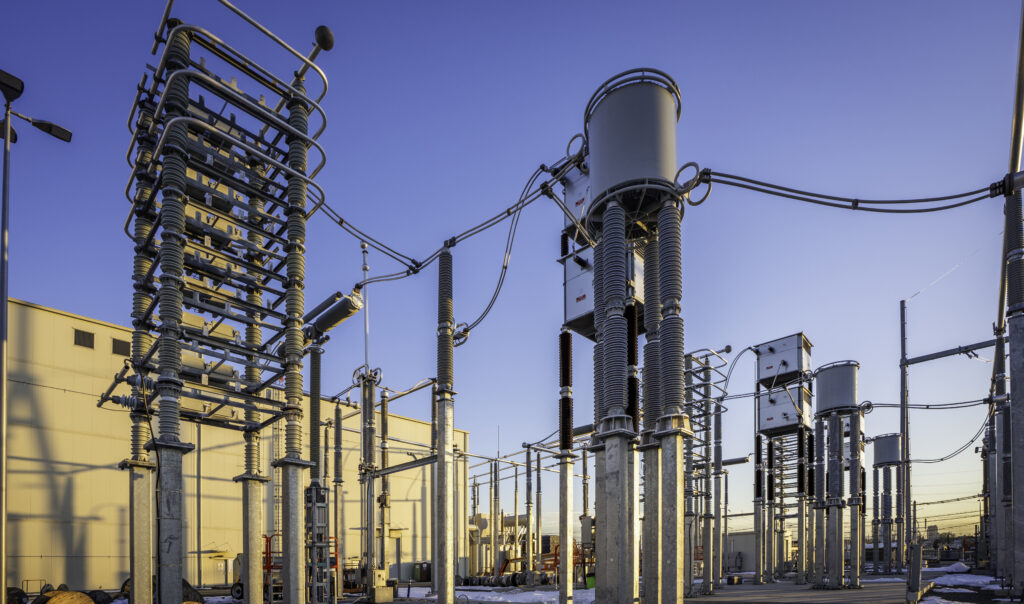
Electricity generated by Hydro-Québec’s hydropower facilities must travel hundreds of miles to reach New York City. Direct current electricity transmits more efficiently over long distances. However, in order for that electricity to enter the city’s electrical grid, it must be converted to alternating current that is used in our everyday lives.
While crews advanced the transmission line across New York, another Kiewit team was solving an equally complex challenge in Queens, building the converter station that would allow the renewable power to enter New York City’s electrical grid.
“The Astoria Converter Station is really a first-of-its-kind project, not only for New York City, but also for Kiewit,” Project Sponsor Travis Mohr said. “We brought together engineering teams from across the company to help deliver the project.”
Kiewit’s partner, Hitachi Energy, provided the HVDC engineering and technology that became the heart of the facility. Engineers, constructors and designers worked together from the beginning, learning the technology while developing a plan to build it.
“Because this was an EPC project, every design decision had to consider how the facility would be built. That close collaboration between engineering and construction was essential from day one,” said Elisabeth Kidane, Kiewit design manager. Building the converter station meant coordinating with partners well beyond the project site.
“We had to integrate with people all over the world,” Kiewit Project Manager Kendall Watts said. “Internally we were bringing together engineering and construction teams from across Kiewit, and externally we were working with Hitachi engineers in Sweden, India, England and other locations.”
Closer to home, the team also met with New York City building officials, the fire department and other agencies early in the design process to address details that are unique to HVDC converter stations.
Building the converter station required more than integrating a new technology. The project’s location in the middle of New York City introduced constraints that shaped nearly every design decision.
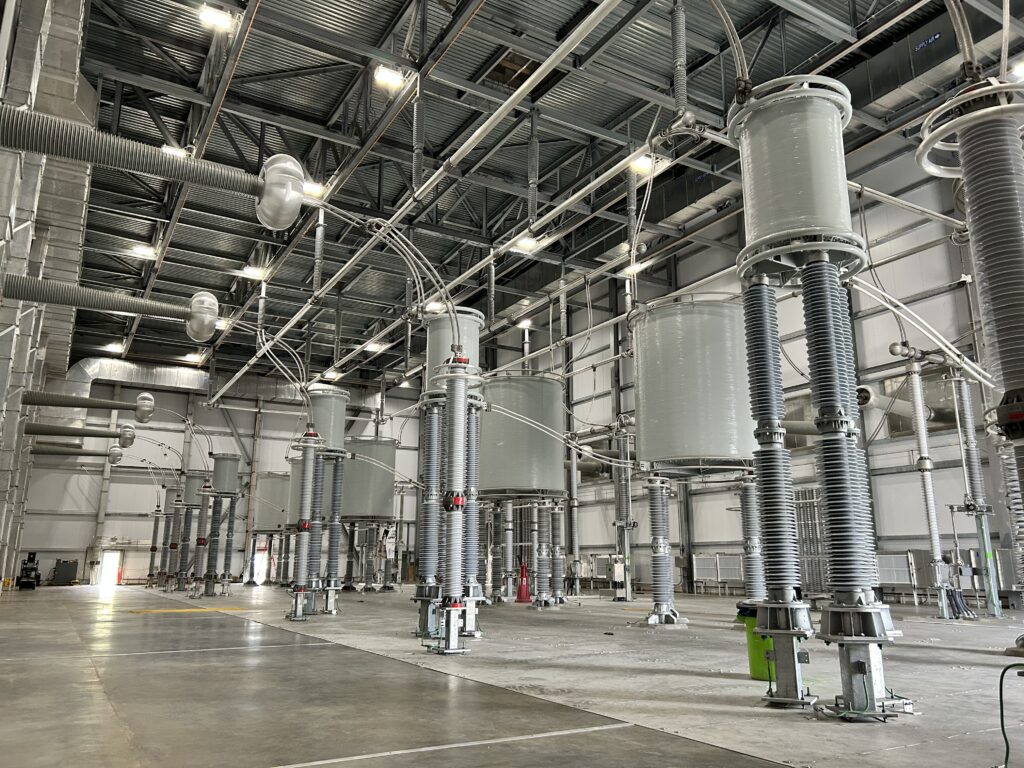
“Because of our proximity to LaGuardia Airport, some of the traditionally high-powered conversion equipment, such as the reactor yards and the DC equipment, which are usually installed outdoors, needed to be housed indoors within a controlled electromagnetic environment,” Kidane said.
Those requirements influenced nearly every aspect of the design, from the building layout to the structural, mechanical and electrical systems. Engineers worked across disciplines to create a facility capable of containing electromagnetic fields while meeting strict temperature, humidity, flood, seismic and wind requirements.
When construction of the station concluded, it was ready for the transmission line arriving from the North.
A Lasting Impact
Today, the transmission line quietly carries renewable hydropower beneath New York to the Astoria Converter Station, where it enters the state’s electrical grid.
Most people will never see the infrastructure that makes that possible. The line remains buried beneath the landscape, but its impact is already reaching homes and businesses across New York City.
For Kidane, the project’s impact extends beyond the engineering.
“What means the most to me is where this project is located,” she said. “This part of Queens has been burdened by fossil fuel emissions for decades. Being able to transform one of the city’s most industrial sites into clean energy infrastructure that benefits communities across New York City is something I’m incredibly proud of.”
Delivering that impact took years of planning, engineering and construction, but just as importantly, it required people willing to solve problems together.
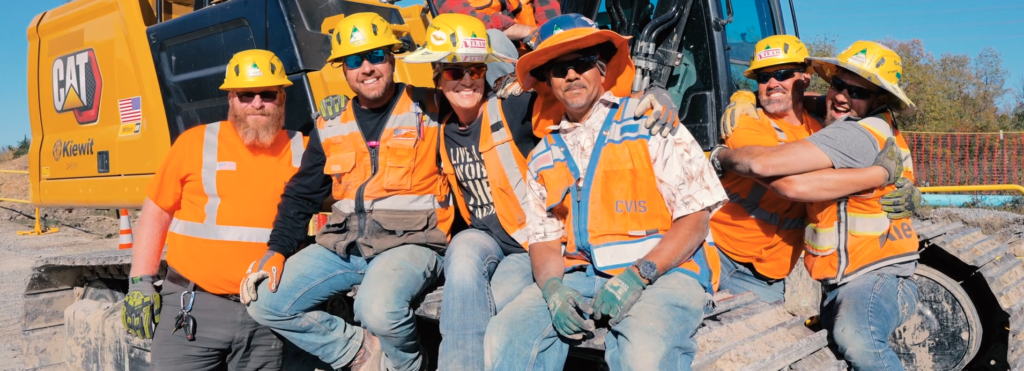
“There’s a common Kiewit culture that kind of weaves itself through everybody that works for Kiewit,” Adam said. “It creates a foundation that’s really easy to build a team on.”
For Kiewit, CHPE delivered more than renewable energy. It established new capabilities in HVDC transmission and converter station delivery while demonstrating the value of integrated engineering, procurement and construction. From the earliest planning efforts to the final connection in Queens, that collaboration helped transform one of North America’s most ambitious underground transmission projects into a new source of reliable, renewable power for New York City.