
Making the Invisible Visible
July 17, 2026
What cannot be seen can still be modeled, giving Kiewit teams new insight into how complex systems will perform before construction begins.
Cooling the Cloud
In a data center, even one degree matters. Over time, a small temperature difference can add millions of dollars in energy costs. For teams planning modern data centers, that makes thermal design an important early priority, with cooling strategies that can shape performance long before construction begins.
As demand for new data centers rises across North America, those decisions are becoming more important than ever. The way air moves through a building, how equipment is arranged and how cooling systems are designed can all affect reliability and cost over time.
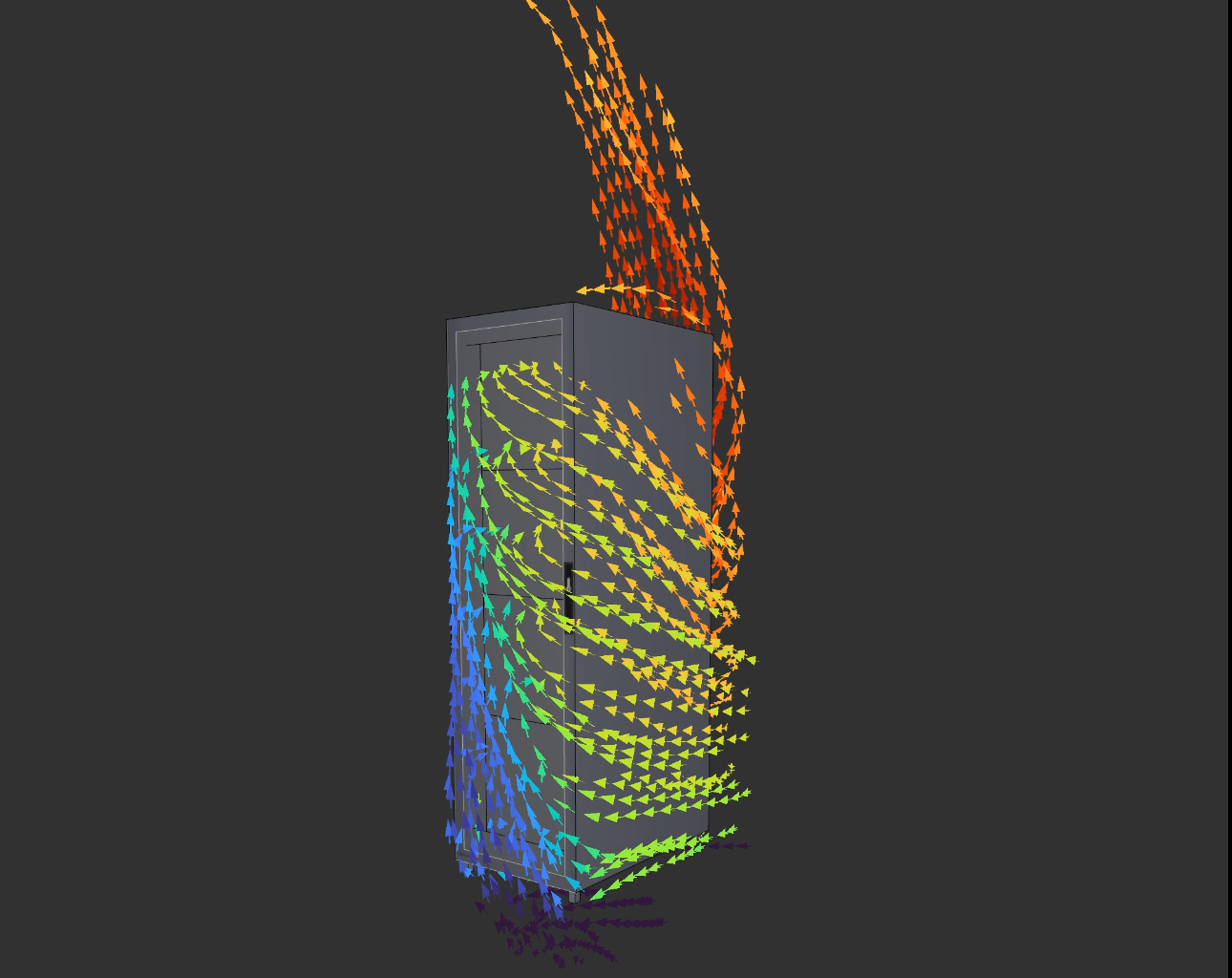
Heat and air movement don’t show up on a floor plan, but they play a major role in performance. Air can slip through gaps, bypass equipment and recirculate hot exhaust into places it does not belong. Left unaddressed, those issues can drive up energy use and limit performance over time.
So, how do you cool the cloud when airflow inside a data center is not always easy to predict? Computational fluid dynamics (CFD) modeling provides the answer.
What is computational fluid dynamics?
STAGE 1 CFD helps teams understand how heat transfer impacts gas or liquid movement through a space
STAGE 2 Analyze how that movement affects performance, safety and design factors
STAGE 3 Design more efficient, informed and reliable systems
Where it can be used
- Fire and smoke analysis
- Data centers
- Carbon capture projects
- Evaporation ponds
- Road and rail transit tunnels
- Wastewater treatment facilities
- Effluent pump stations
- Vortex grit chambers
- Chemical and process engineering
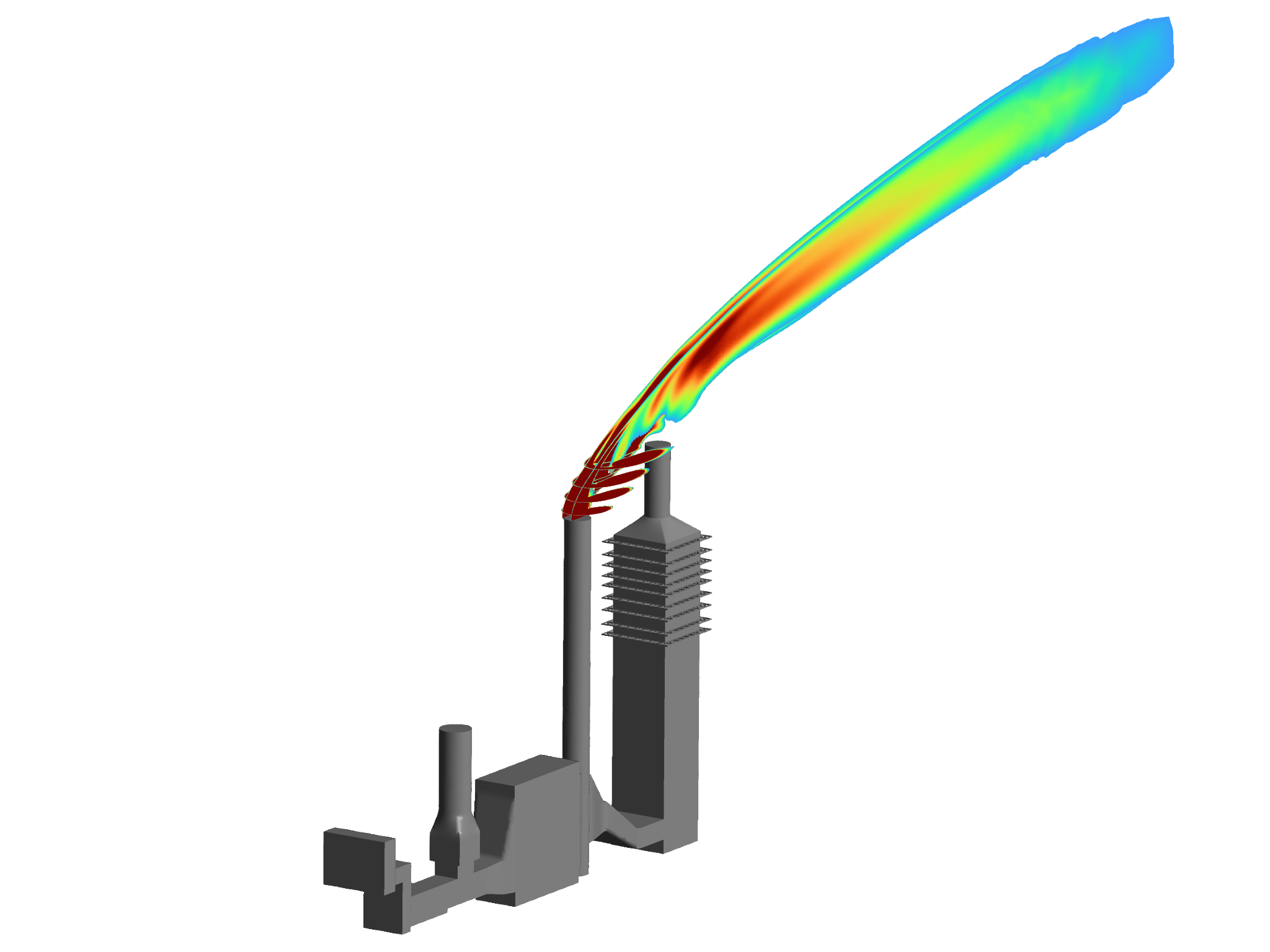
- Plume analysis
- Blast analysis
- Bridge flutter analysis
- Concrete flow modeling
- Heat exchangers
- Building HVAC
Turning Airflow Into Insight
At Kiewit, that work starts early to get ahead of airflow challenges. Kiewit Engineering Group Inc.’s in-house CFD team uses advanced digital modeling to show where hot spots may develop, how cold air circulates and what design changes could improve performance before key decisions are locked in.
“With CFD, we can test different designs virtually, from ceiling heights to aisle layouts, and find the most efficient solution,” said Will Fischer, a mechanical engineer at Kiewit.
In fact, in one case, the modeling showed that increasing a server room’s ceiling height by five feet improved the cooling efficiency of the room. Over time, better airflow and cooling strategies can lower energy use and help reduce a facility’s overall carbon footprint.
Early modeling can also help teams cut unnecessary equipment, make better use of space and avoid added construction costs.
12 Foot Ceilings

17 Foot Ceilings
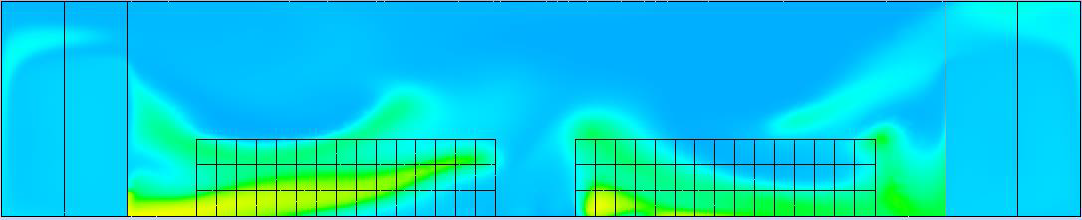
CFD modeling showed that higher ceilings improve cooling efficiency by allowing hot air to rise and move away from equipment.
The Science Inside the Simulation
With CFD, engineers build a 3D model of a space, whether that is a server room, tunnel or another complex environment, and divide it into millions of digital cells. They then use physics-based equations to predict how fluids such as air, smoke or concrete will move through that space.
“People think it’s overly technical, but it’s really about visibility,” said Baljinder Bassi, who leads the CFD team. “A picture speaks a thousand words. A video speaks a million. CFD lets us show, not just tell.”
Bassi has nearly 30 years of experience in CFD and led the effort to bring the capability in-house at Kiewit, establishing the company’s modeling team in 2020.
Still, the tool is only as strong as the people using it. Bassi explained that building the model correctly is one part of the job. Knowing how to read the results and apply them to a real project is what makes the work useful.
“My team has specialist expertise in grid generation, numerical simulation and the specific physics of each problem,” Bassi said.
That expertise allows the team to build detailed models that evolve with the design and help projects make informed decisions from pursuit through delivery.
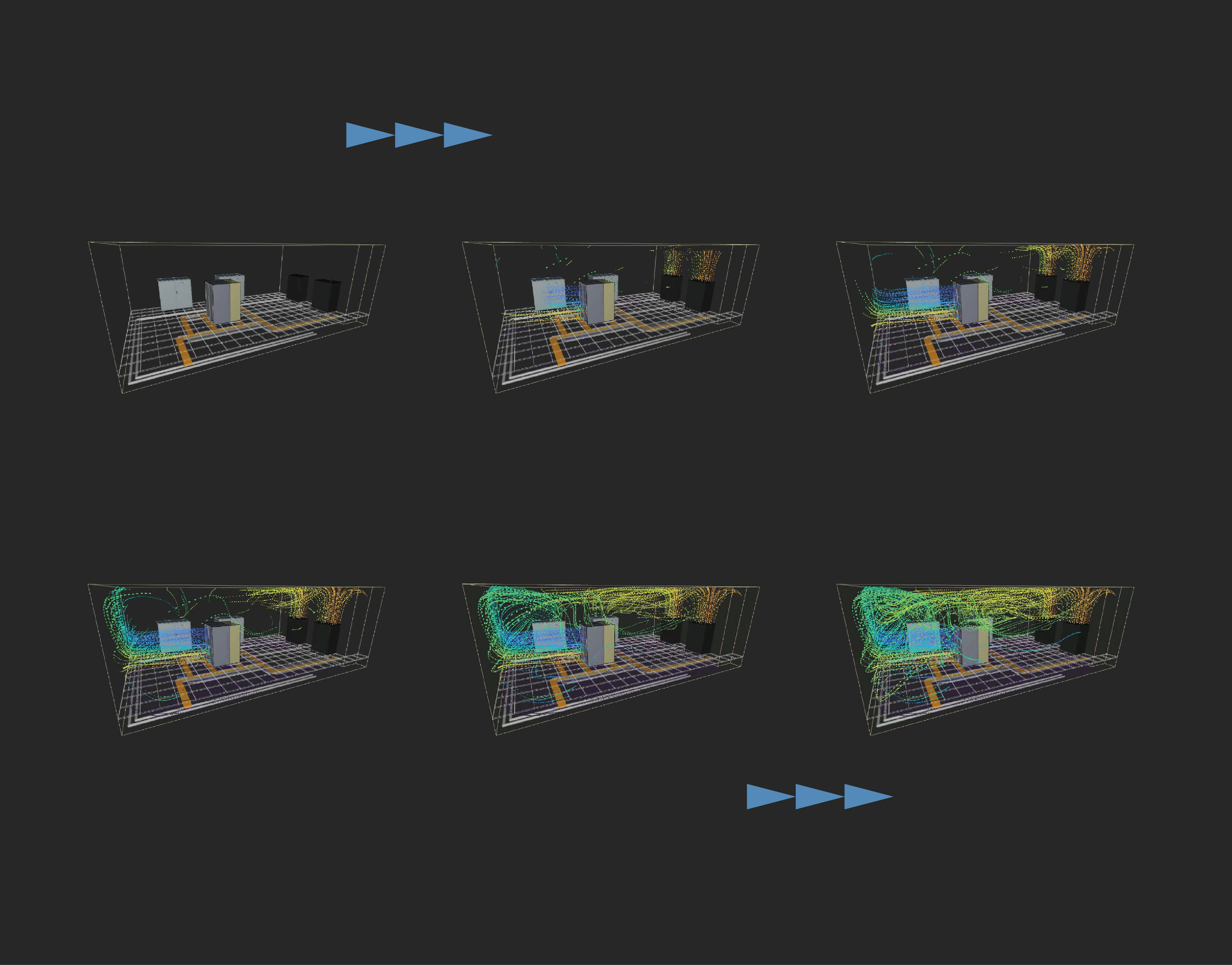
Broader Markets, Same Expertise
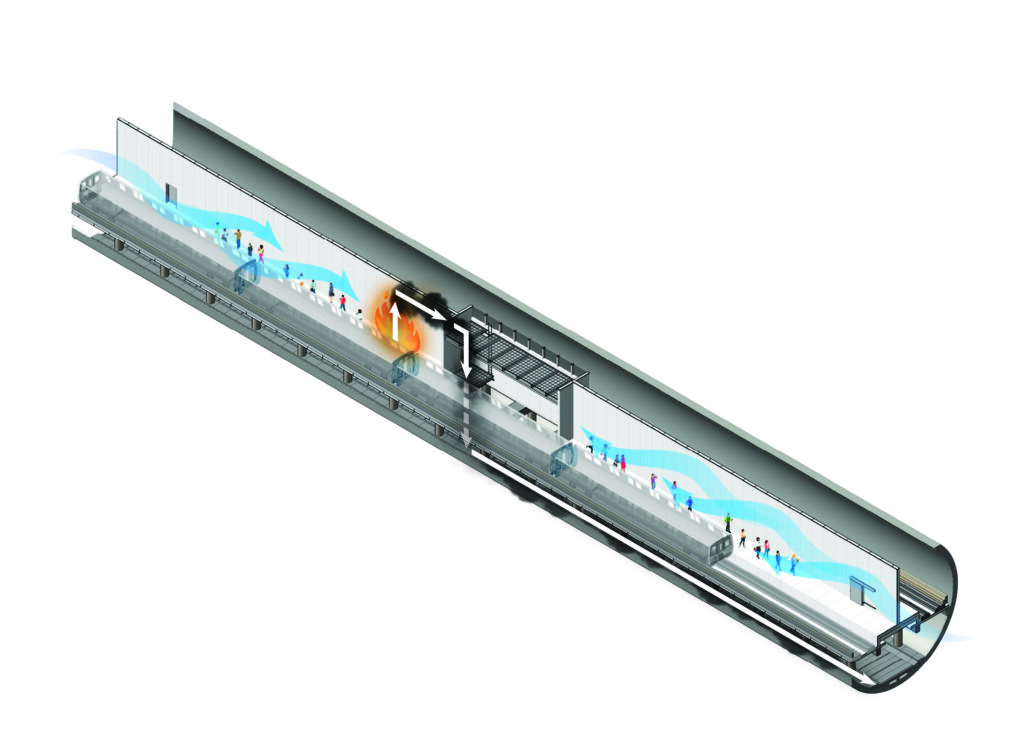
While CFD helps improve airflow performance in data centers, it serves a different purpose in underground transit systems: protecting people during an emergency.
“We use CFD to understand how smoke will behave in a tunnel or station during a fire event,” said Bassi. “The goal is to help control that smoke in a way that supports life safety and gives people a safer path to evacuate.”
During a fire, ventilation systems are designed to push fresh air into safe areas while directing smoke away from evacuation paths. Using CFD, the team can model how smoke will rise, where it will collect and how air can be moved to keep exit routes clear.
The same approach has been applied to carbon capture systems, water infrastructure and even concrete placement.
On a recent project, the team was asked to model how concrete would flow into a sealed steel mold, where conditions could not be observed during placement.
“In this case, the client couldn’t see inside the mold while pouring,” Bassi said. “They wanted to know if air pockets would form and whether the concrete would fully fill the space.”
The team built a digital model and predicted where voids would develop. When the project team later tested the same scenario with physical models, the results matched.
It was the first time the team had applied CFD that way on a real-world project, opening the door to new applications for making the invisible visible. For clients, that means better decisions earlier, fewer surprises and systems that perform as intended from day one.
To learn more about Kiewit’s engineering capabilities, click here.