Using Progressive Design-Build at Lake Conestee
July 17, 2026
Learn more about this project in “Holding the Line at Lake Conestee.”
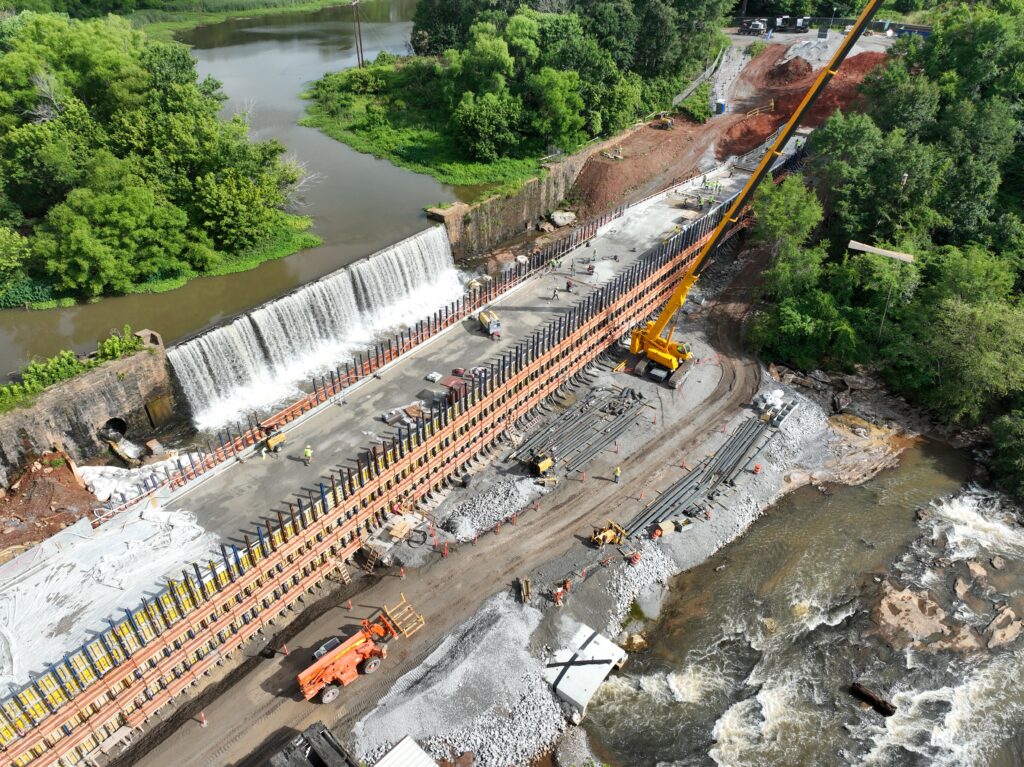
For Scott Jones, one of the most rewarding parts of the Lake Conestee Dam project was seeing engineering and construction work side by side from the very beginning. As one of Kiewit’s engineers for hydropower, dams and hydraulic structures, Jones served as engineer of record and design manager on the project, helping lead the replacement of a 133-year-old stone masonry dam with a modern roller-compacted concrete structure designed to protect the surrounding community and environment for decades to come. With more than two decades of experience in dam design, evaluation and inspection, he guided the team through complex engineering and permitting challenges while helping deliver the project 12 months ahead of schedule.
In the Q&A below, Jones explains how the project’s progressive design-build approach helped make that possible.
What made this project different?
Lake Conestee was Kiewit Infrastructure South Co.’s first dam delivered using a progressive design-build approach, where engineering, permitting and construction moved forward together at the same time instead of in sequence.
Why is progressive design-build beneficial on a project like this?
It brings owners, engineers and constructors together from the start under a single, phased contract. Instead of locking in a design and price upfront, the team collaborates to develop the design, refine costs and address risks before construction begins.
How did that change the design process?
It required the team to rethink how and when work happened. Rather than following a fixed sequence, design priorities were driven by what the project needed to move forward, especially permitting.
Some elements were advanced earlier to support approvals, while others were deferred. This allowed early work like clearing, foundation preparation and diversion setup to begin while portions of the design were still being finalized.
What did that look like in practice?
Engineering and construction worked closely from the outset, with constructability shaping key design decisions. That collaboration influenced everything from how the team managed river flows during construction to how the dam itself was built.
The team selected roller-compacted concrete as the primary material for its cost efficiency and constructability, then enhanced durability by adding a protective facing to help the structure withstand long-term erosion.
They also coordinated with regulatory agencies to secure phased approvals, an uncommon approach for dam projects.
That coordination carried through to initial impoundment. Crews set the bulkhead panels to close the diversion, and water gradually rose between the existing structure and the new dam. The transition required precise timing and alignment across teams, captured in the time-lapse as the reservoir filled and the new structure began holding water as designed.
What did it make possible?
By aligning design and construction early, the team reduced delays, maintained momentum and delivered the project in 16 months.
The final design reflects that approach with a wider, more robust structure built to meet modern standards and perform reliably for decades to come.