Salmon Hatch in Upper Klamath
April 8, 2026
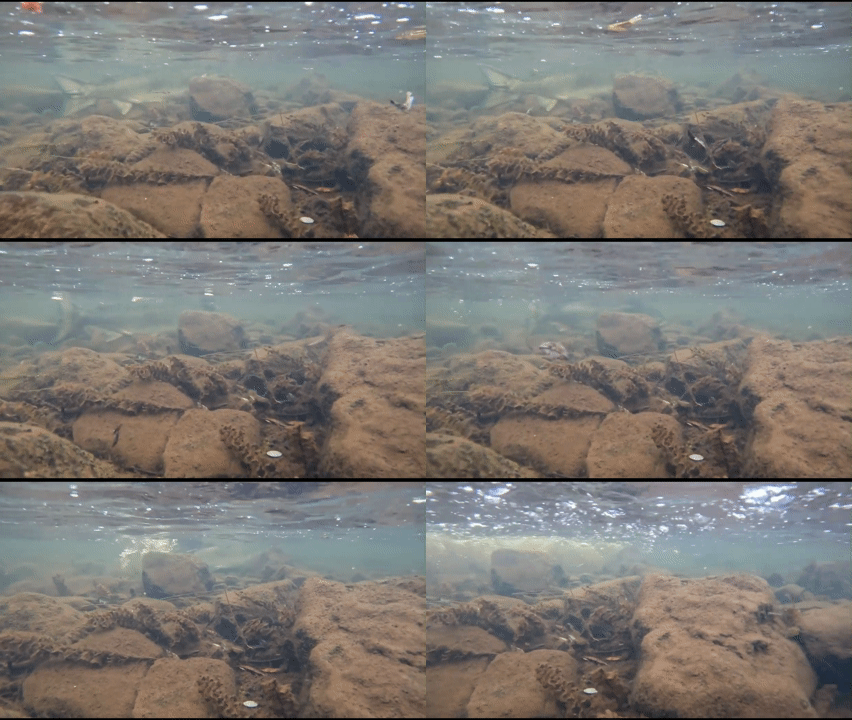
Above video courtesy of the Oregon Department of Fish and Wildlife. Underwater footage shows a fall-run Chinook salmon in a tributary of the Klamath River in 2024 following the Klamath Dam removal.
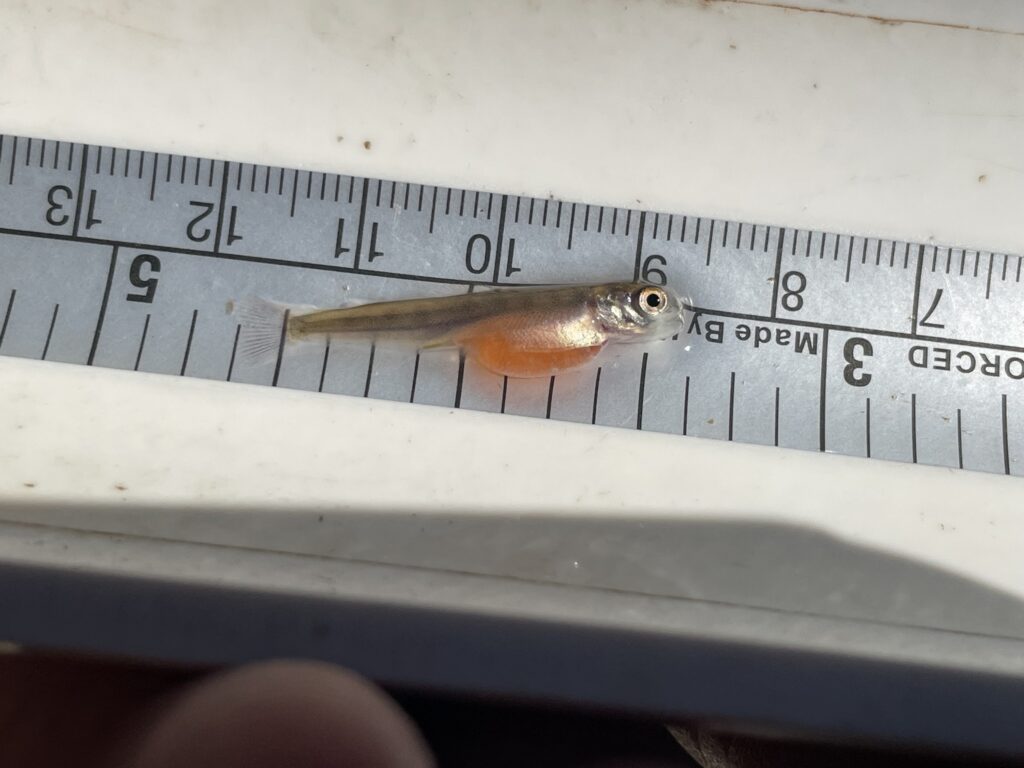
Naturally produced Chinook salmon have hatched in the Upper Klamath Basin for the first time in more than a century, according to the Klamath Tribes’ Ambodat Department.
The Tribes documented the fish, known as c’iyaal, in mid-March in tributaries of Upper Klamath Lake. The milestone follows the return of adult Chinook salmon to the region for the first time since 1912, according to the Oregon Department of Fish and Wildlife.
“This was no small thing,” the Tribes said in a news release. “Chinook salmon have been blocked from their spawning grounds for over a century. They have survived against every odd, pressed against every barrier, and are now, at last, breaking through.”
The milestone underscores the impact of the work completed along the river.
“The successful return and spawning of non-hatchery salmon gives proof and validation that removal of fish barriers over 100 years old works and is valid,” said Dan Petersen, project manager.
The return follows the 2024 removal of four hydroelectric dams along the Klamath River, the largest dam removal effort in U.S. history. Kiewit removed the J.C. Boyle, Copco No. 1, Copco No. 2 and Iron Gate dams, demolishing more than 100,000 cubic yards of concrete, removing 1.3 million cubic yards of earth and clearing thousands of tons of steel to restore river connectivity. The effort reopened more than 400 miles of habitat for salmon passage and returned 35 miles of river to free-flowing conditions.
“By engineering and successfully removing all of the dams at the same time allowed for minimizing impact to the river and accelerating the return of these salmon,” Petersen said.
“A major milestone was achieved with the hatching of these salmon validating and rewarding the teams’ accomplishments to remove these barriers and return the health of the Klamath River.”
Kiewit also constructed two 260-foot single-span bridges to maintain access across the river at separate locations.
The Tribes said monitoring will continue throughout the season to evaluate juvenile fish and overall spawning success in the upper Klamath.
For a closer look at the project, check out the 2024 edition of Kieways.