NNSA Announces Approval to Begin Full Construction of SRS Specialized Training Facility for Plutonium Pit Production
April 2, 2026
AIKEN, S.C. (March 9, 2026) – The U.S. Department of Energy’s National Nuclear Security Administration (NNSA) has announced approval of start of construction and established a project baseline, known as Critical Decision (CD)-2/3 approval, for the High-Fidelity Training and Operations Center (HFTOC) at the Savannah River Site (SRS).
The HFTOC will mimic the capabilities in the Savannah River Plutonium Processing Facility (SRPPF) Main Process Building and allow operators to develop pit production competencies on “like-for-like” sets of equipment with surrogate materials. The capabilities at HFTOC are essential to develop SRS’ pit production workforce and will expedite the production of war reserve plutonium pits once SRPPF comes online.
Savannah River Nuclear Solutions (SRNS), the managing and operating contractor for the site, was notified by NNSA of CD-2/3 approval for the HFTOC in February. The approval allows full construction of the HFTOC and marks a key milestone in establishing an enduring plutonium pit production mission at SRS in support of the nation’s nuclear deterrent.
NNSA Savannah River Field Office Manager Michael Mikolanis highlighted the partnership between NNSA and SRNS as fundamental in gaining this approval and moving NNSA’s pit mission forward.
“The HFTOC at SRS will be an important training facility used to accelerate the re-establishment of large-scale plutonium pit manufacturing in the United States,” Mikolanis said. “Achieving this milestone shows SRS’ commitment to delivering with urgency the needed infrastructure to advance this critical national security mission.”
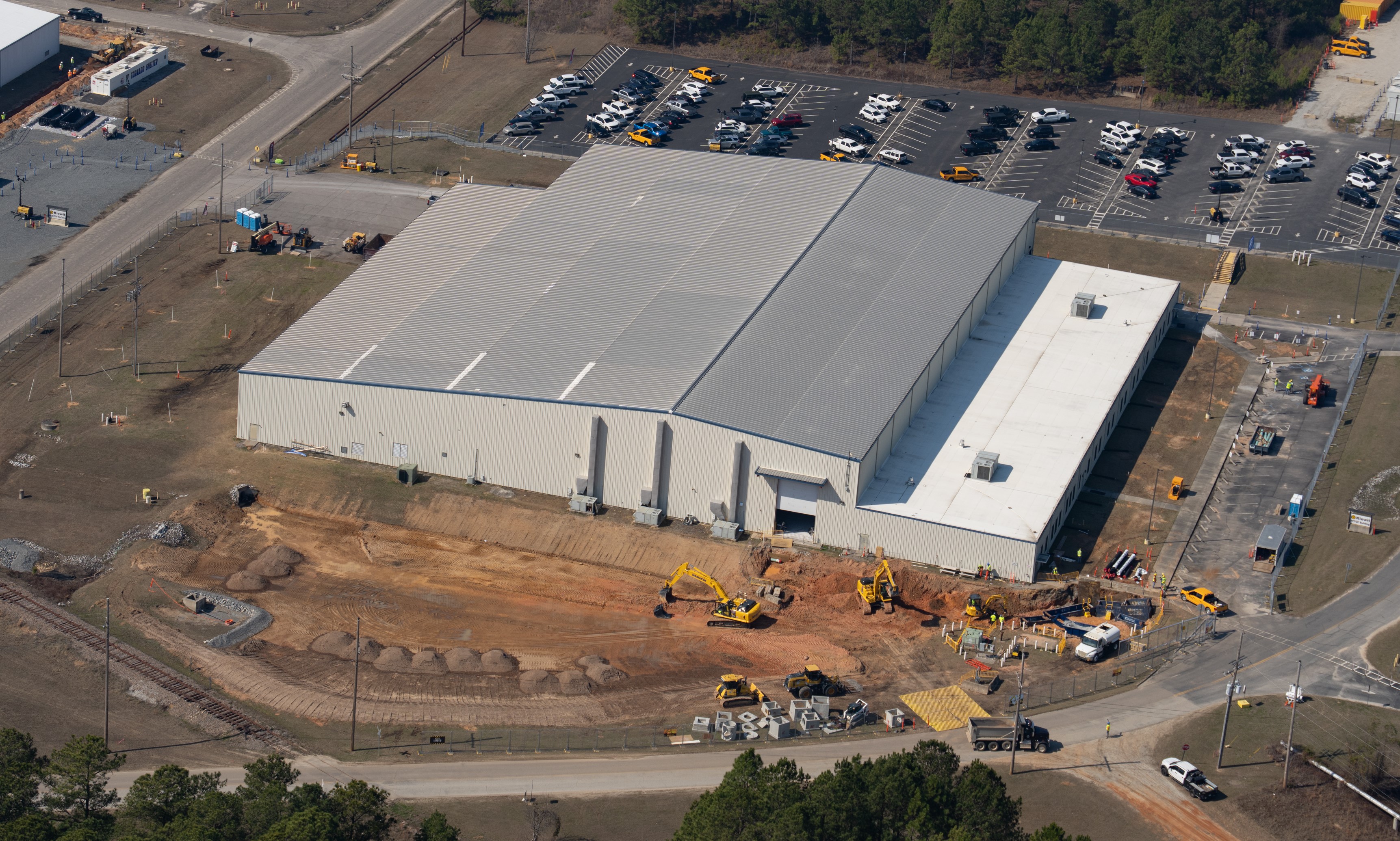
The current 103,000-square-foot HFTOC structure will be transformed through commercial construction practices into a non-nuclear training facility for SRPPF personnel and provide hands-on experience with simulated radiological controls.
SRNS has partnered with subcontractor Kiewit to build out the HFTOC. Construction activities will involve exterior and interior modifications to include demolition work and installation of new key systems such as ventilation, gas and electrical. Additional activities include procurement, installation and commission of a high-fidelity production line, material characterization system lab, receipt inspection lab, and salt processing line, as well as Balance of Plant equipment.
The HFTOC subproject is projected to cost $1.4B with completion in 2028, at which time operators can begin training in the facility before construction of the SRPPF Main Process Building is complete.
SRNS Senior Vice President and SRPPF Project Director Mike Basham emphasized the importance of the demanding project execution pace to modernize the nation’s nuclear weapons infrastructure.
“The SRPPF Project team is committed to supporting and accelerating NNSA’s pit production mission. The HFTOC subproject team focused on implementing efficiencies from non-nuclear, commercial construction and accelerated the project delivery schedule of the HFTOC,” Basham said. “SRNS is incredibly grateful to our NNSA partners, our HFTOC subcontractors, and the dedicated team members across the enterprise who are working tirelessly to accelerate SRPPF construction efforts and support upholding the nation’s nuclear defense and security.”
The SRPPF project involves repurposing an existing Hazard Category-2 structure and support facilities to establish an enduring pit production mission at SRS and is part of the NNSA’s twosite solution to produce no fewer than 80 plutonium pits per year in accordance with federal law. Plutonium pits are an essential component to nuclear weapons. The pits will be produced at facilities at SRS and Los Alamos National Laboratory in New Mexico. The two-site strategy provides an effective, responsive, and resilient nuclear weapons infrastructure with the flexibility to adapt to shifting national security requirements.
Established by Congress in 2000, NNSA is a semi-autonomous agency within the U.S. Department of Energy responsible for enhancing national security through the military application of nuclear science. NNSA maintains and enhances the safety, security, and effectiveness of the U.S. nuclear weapons stockpile; works to reduce the global danger from weapons of mass destruction; provides the U.S. Navy with safe and militarily effective nuclear propulsion; and responds to nuclear and radiological emergencies in the U.S. and abroad.
Savannah River Nuclear Solutions, a Fluor and HII partnership company, is responsible for the management and operations of the Department of Energy’s Savannah River Site, located near Aiken, South Carolina.