In 2026, Kiewit proudly marks its 85th year of building in Canada.
The company’s Canadian story began in 1941 in the North, supporting construction of the Norman Wells Oil Refinery and Pipeline. In 1949, Kiewit opened its first Canadian office in Vancouver, establishing a permanent presence in the country. From those early roots, the company expanded across regions and markets, building the relationships, workforce and operational capacity required to serve clients coast to coast to coast. For the past 85 years, Kiewit has delivered complex projects across transportation, energy, marine, water, industrial and emerging sectors that support a changing economy.
“Diversifying our markets has made us a stronger, more resilient business,” said Ryan Tones, president of Peter Kiewit Sons ULC. “Our teams have built hydroelectric facilities, ports and marine infrastructure, highways and transit systems, pipelines and power facilities, and essential water and wastewater systems that protect communities and natural resources. Our investment in our Marine Yard on the West Coast and our continued growth in water, wastewater and mining, reflect our commitment to serving Canada’s evolving infrastructure needs and creating long-term opportunities for our people and partners.”
Today, Kiewit employs more than 4,000 people across Canada, including a strong and growing craft workforce. Positioned across the country, these teams are building on decades of experience while preparing for Canada’s next chapter.
The following timeline highlights select milestones and projects from the past 85 years and illustrates Kiewit’s enduring role in advancing Canada’s energy, infrastructure and economic development.
1941
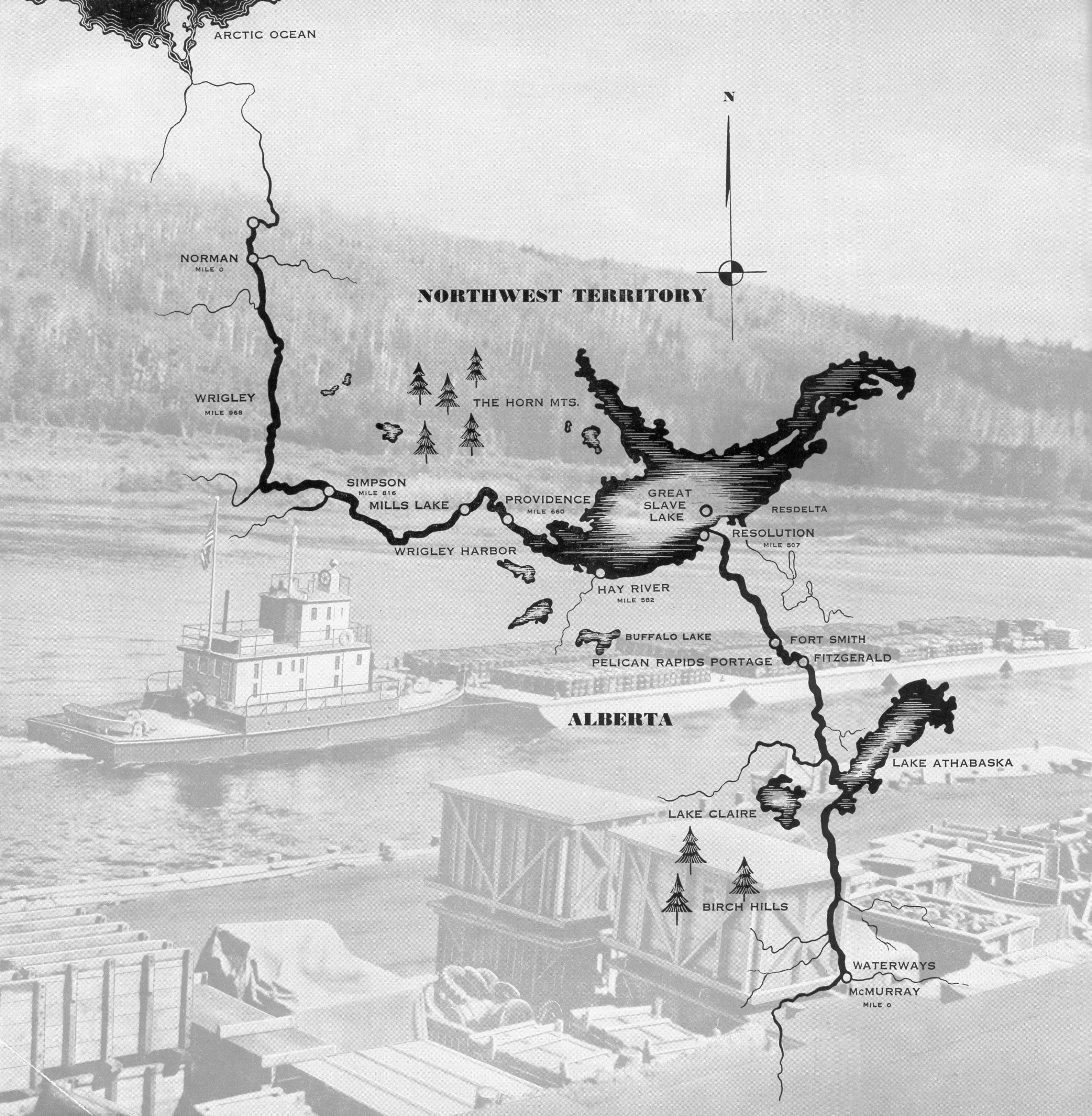
For its first job in Canada, Kiewit mobilizes and transports all equipment and supplies needed to build a crude oil pipeline from an oil refinery in Norman Wells, Northwest Territories, to the Alaska coast.
1957
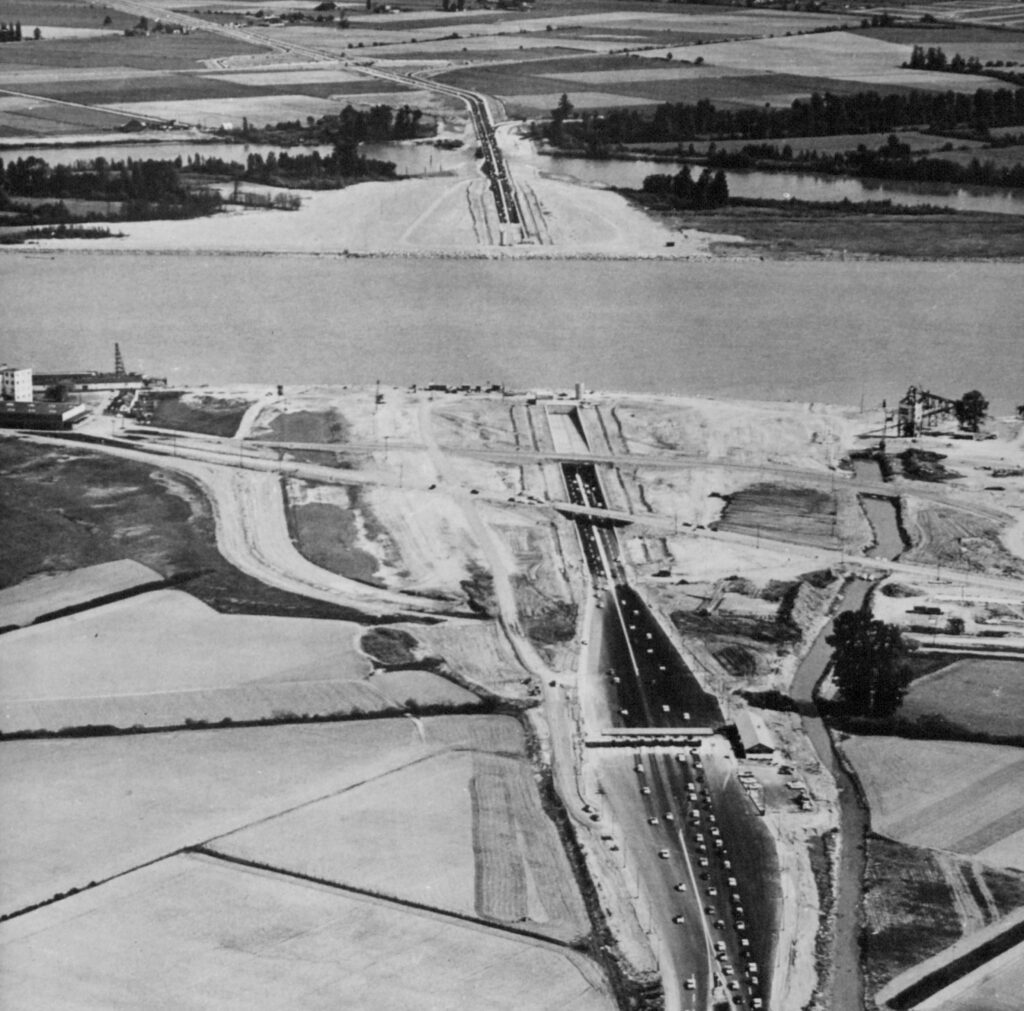
Kiewit constructs the George Massey Tunnel, formerly known as the Deas Island Tunnel, in British Columbia. The project earns the Centennial Safety Award from the British Columbia Department of Labour.

1963
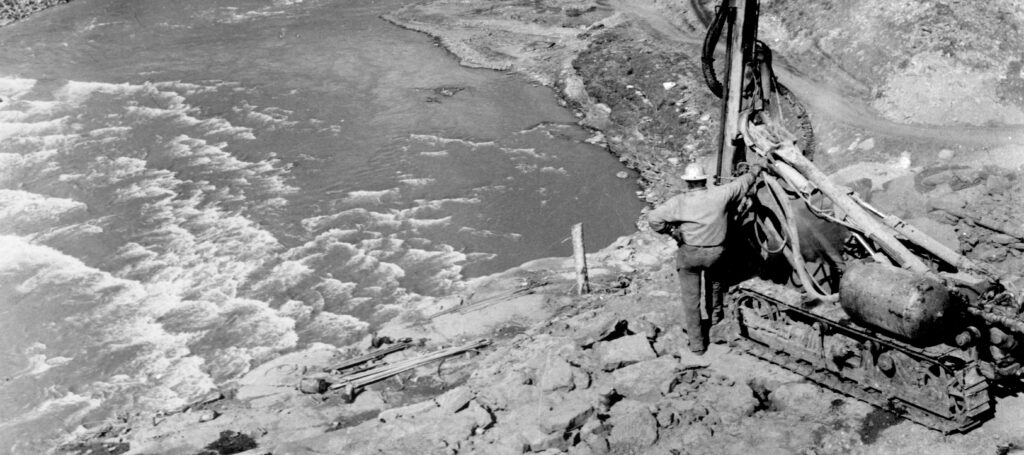
Work begins on the Portage Mountain Dam, now known as the WAC Bennett Dam. Fifty-three years later, in 2018, Kiewit returns to the project to perform upgrades and refurbishments.
1964
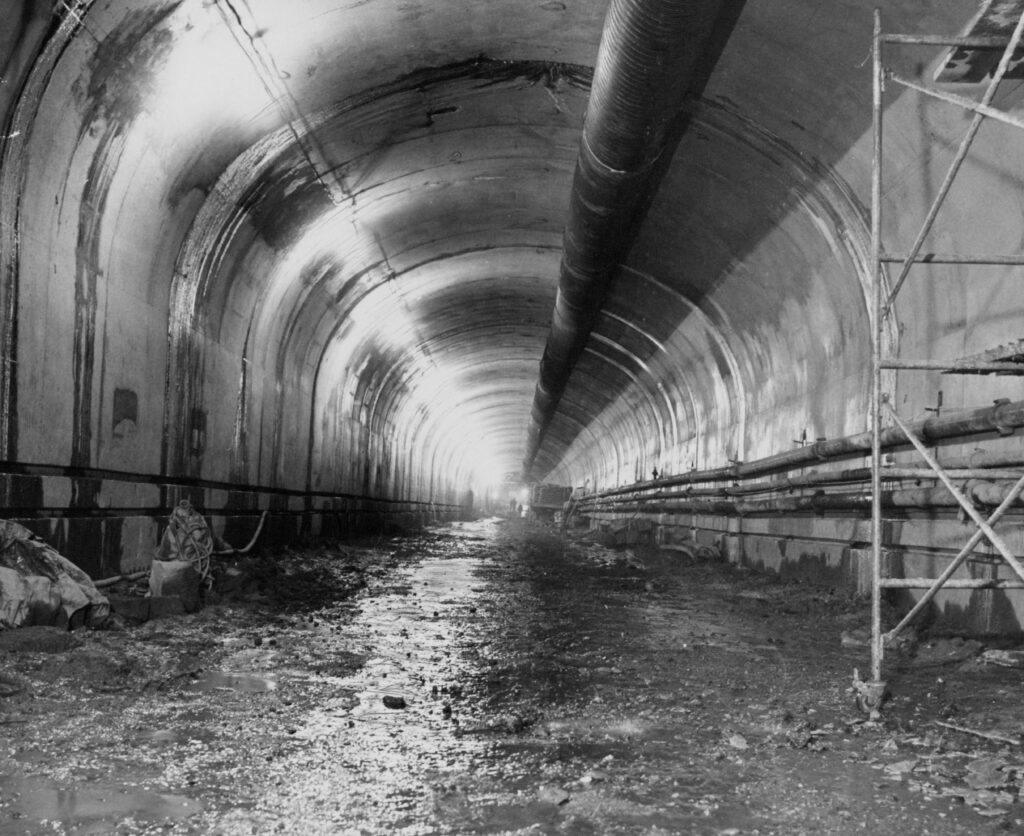
Kiewit takes on tunnel work for the new Metro de Montréal, the city’s subway system.
1968
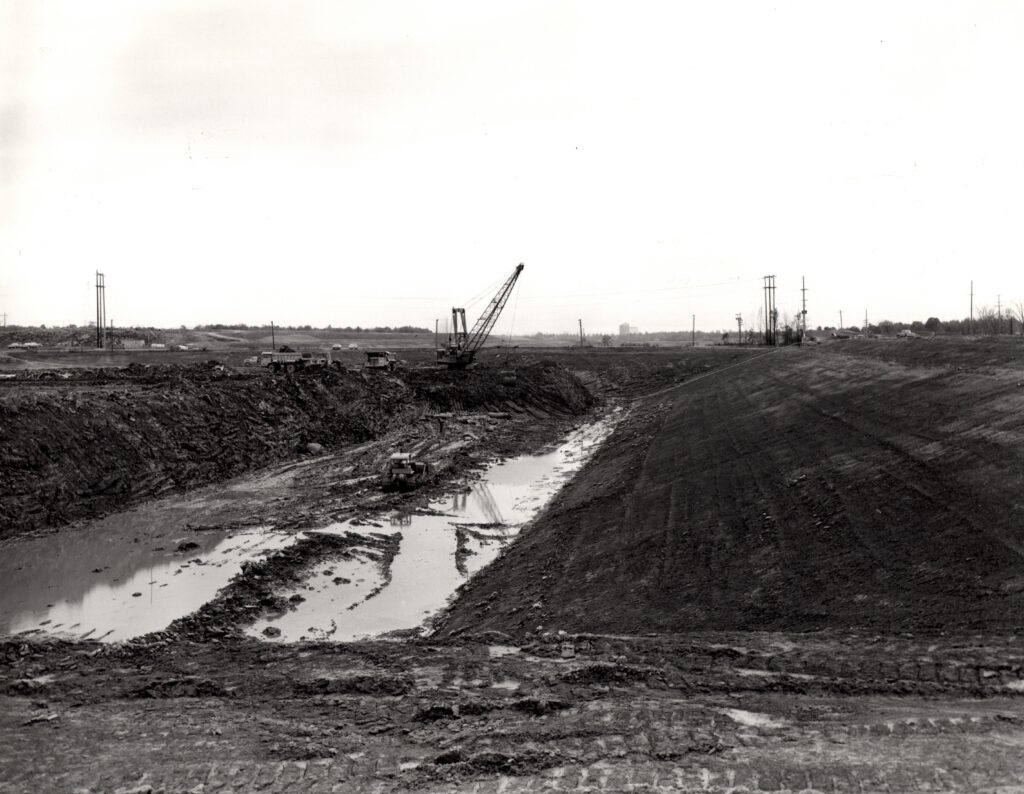
Kiewit begins work on the Welland Canal, excavating 20 million cubic metres of material to provide ships with a safe detour around Niagara Falls from Lake Erie to Lake Ontario.
1975
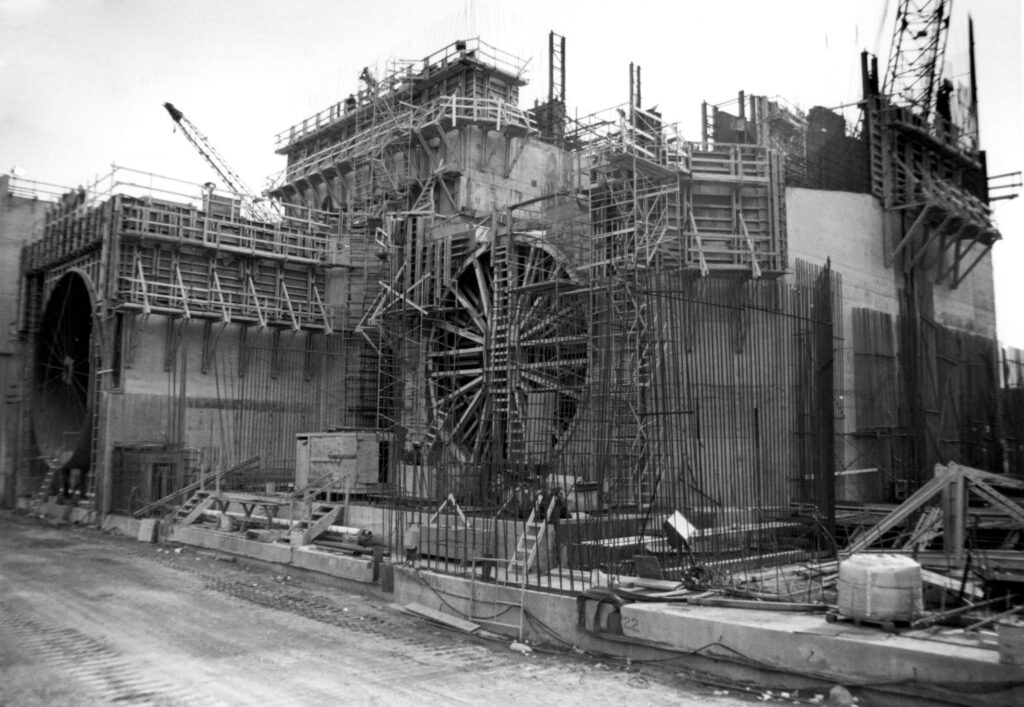
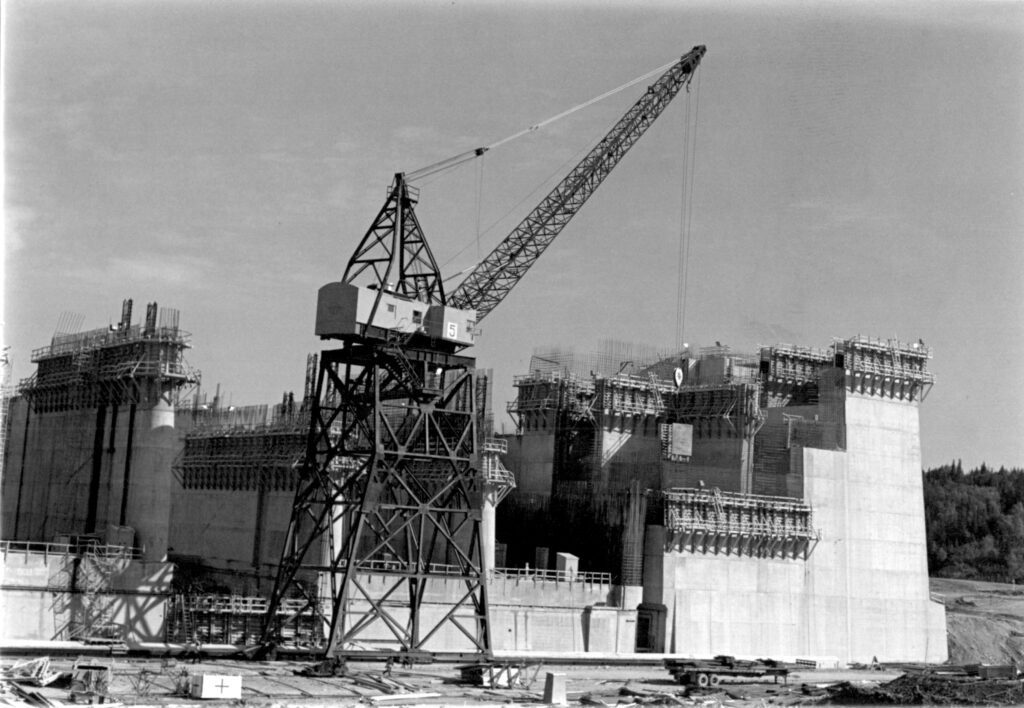
Kiewit secures its first major contract in northern Québec for the James Bay Hydroelectric Complex, constructing 16 of the 29 Duncan dykes that close the reservoir. In 1977, Kiewit constructs a technically challenging embankment across the Eastmain River and a spillway three times the height of Niagara Falls. Then, in 1978, Kiewit works on the LG-3 intake structure, LG-4 dam and the powerhouse. Completion of LG-3 and LG-4 in 1984 marks the end of Phase 1 of the project.
1983
Kiewit performs work on the Nipawin Dam, the second-largest hydroelectric dam in Saskatchewan.
1994
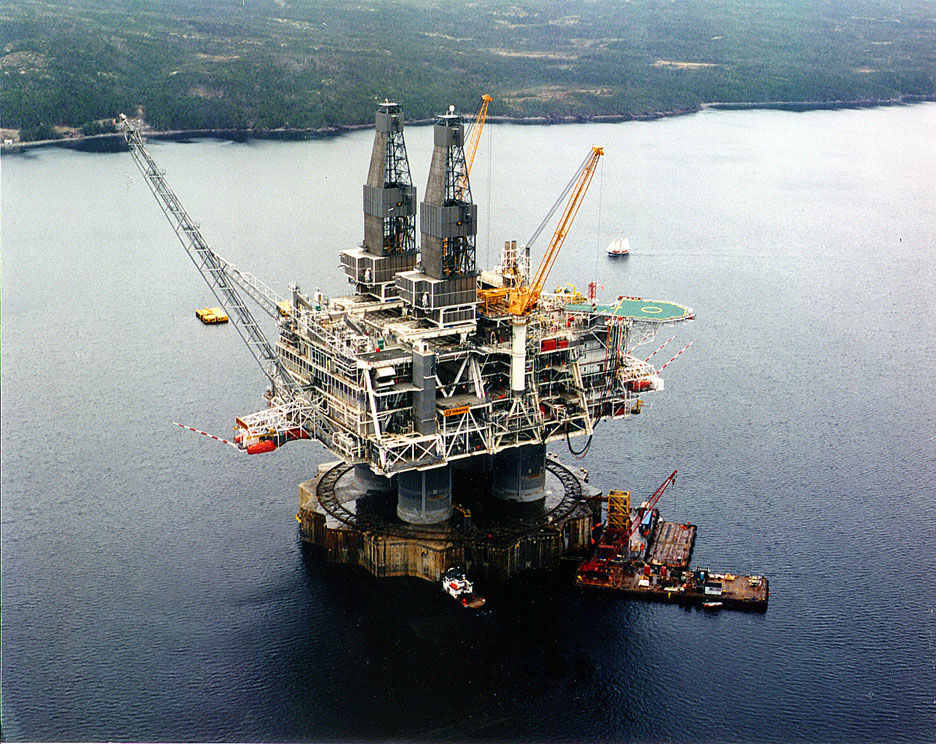
Kiewit partners with Aker to build the Hibernia Gravity-Based Structure in Newfoundland. Designed to withstand the harshest oceanic conditions on Earth, Hibernia’s gravity-based structure is built with 18-inch-thick concrete outer walls. Hibernia pumped its first oil in 1997.
1995
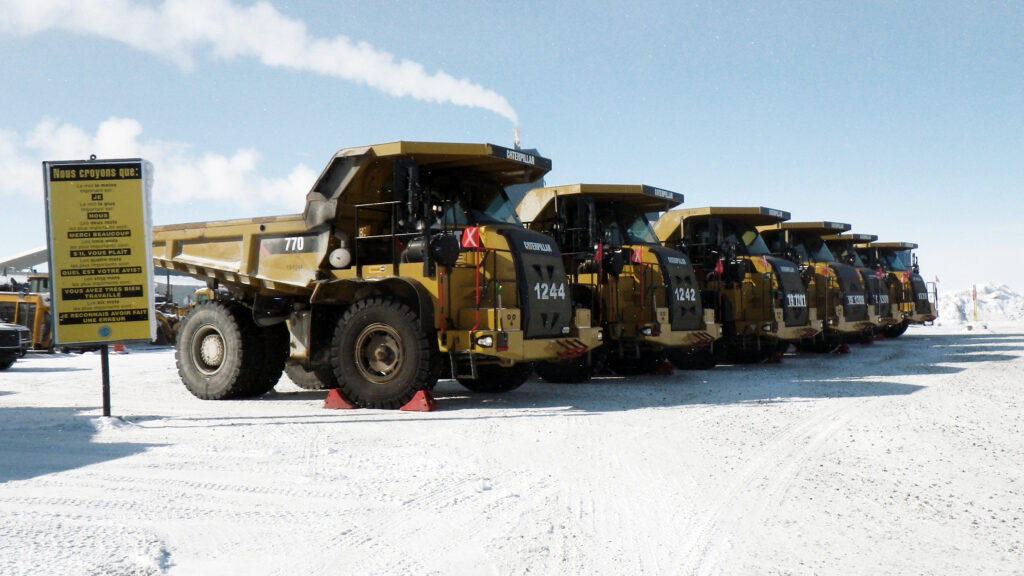
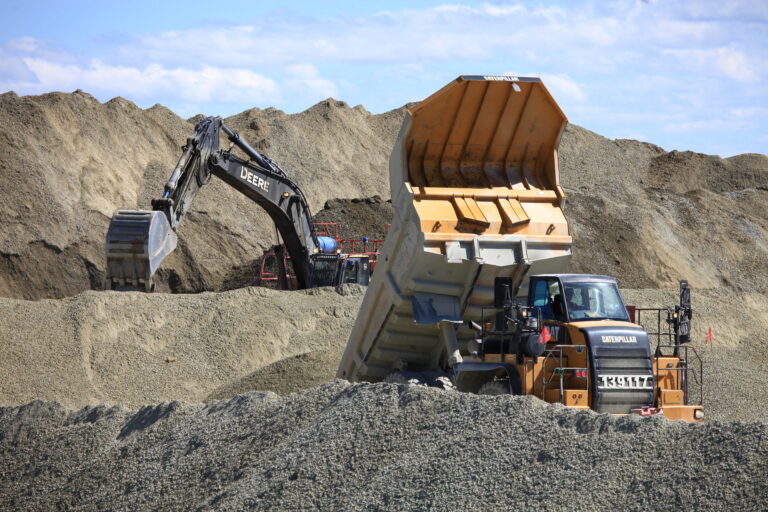
Kiewit begins its 30-year relationship with Indigenous communities at the Raglan Nickel Mine in Nunavik, northern Québec. Work is delivered through the Kiewit-Nuvumiut Joint Venture, a partnership between Kiewit and the local Inuit company Nuvumiut Development Corporation. As the site’s largest contractor, the joint venture team performs open-pit mining, ore transport and aggregate crushing, moving an average of two million metric tons of material annually.
2000
Kiewit completes work on the northern portion of the residue fluid catalytic cracking unit (RFCCU) as part of Irving Oil’s “King of Cats” refinery expansion in Saint John, New Brunswick. The project supports a major upgrade to increase refining capacity and enhance the facility’s ability to process heavier crude into higher-value products, strengthening one of Canada’s largest oil refineries.
2001
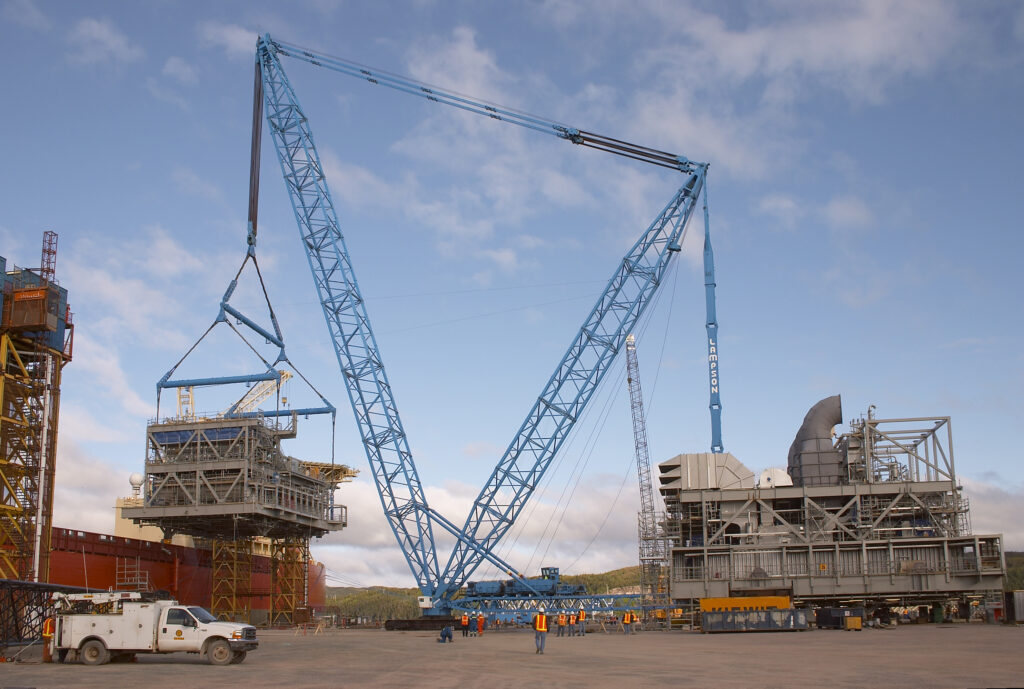
Kiewit acquires the Cow Head Facility in Marystown, Newfoundland, and partners with Aker Kvaerner to execute the contract for topside module fabrication and integration for the White Rose Floating Production, Storage and Offloading (FPSO ) vessel. The hull, constructed by Samsung Heavy Industries, is transported to Marystown, where topside modules are fabricated at the Cow Head facility and integrated onto the vessel. The project is completed in 2005.
2002
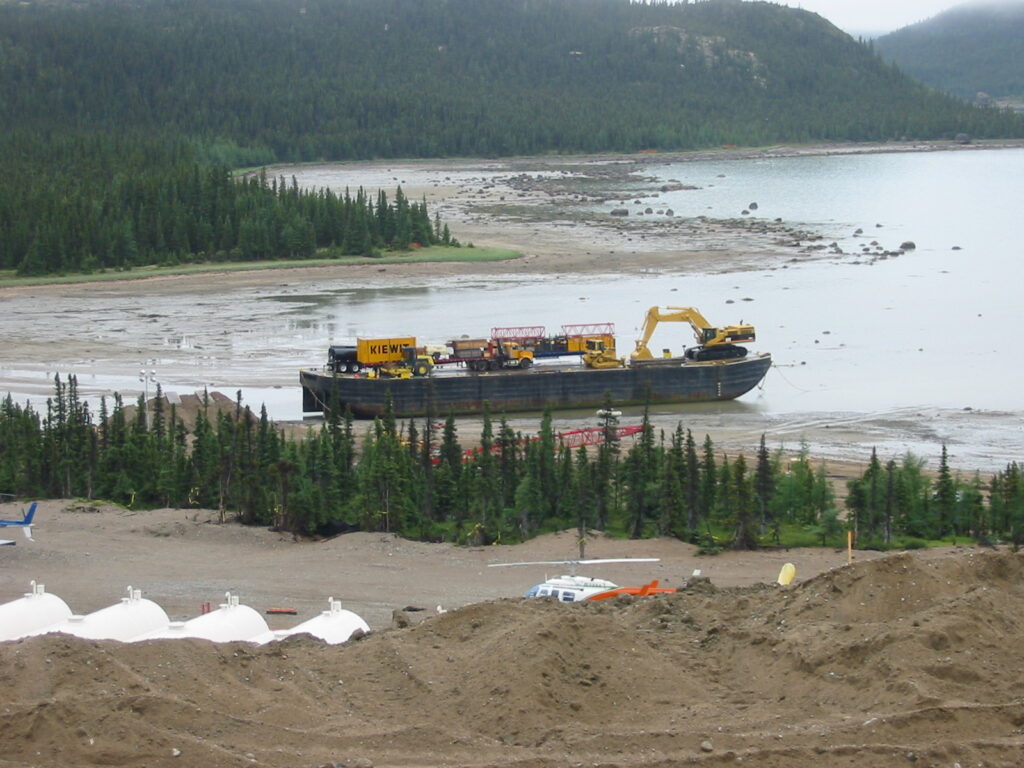
Kiewit performs infrastructure work at the Voisey’s Bay Mine in Newfoundland and Labrador. The project team includes Innu, Inuit and Métis, 16 trade unions and local partners.
2004
Preparing for the 2010 Olympics, Kiewit begins work on the Sea-to-Sky Highway from Vancouver to Whistler.
2006
Kiewit builds the A-25 Bridge and Highway, an alternative route between Montréal and the North Shore and Québec’s first public-private partnership transportation project.
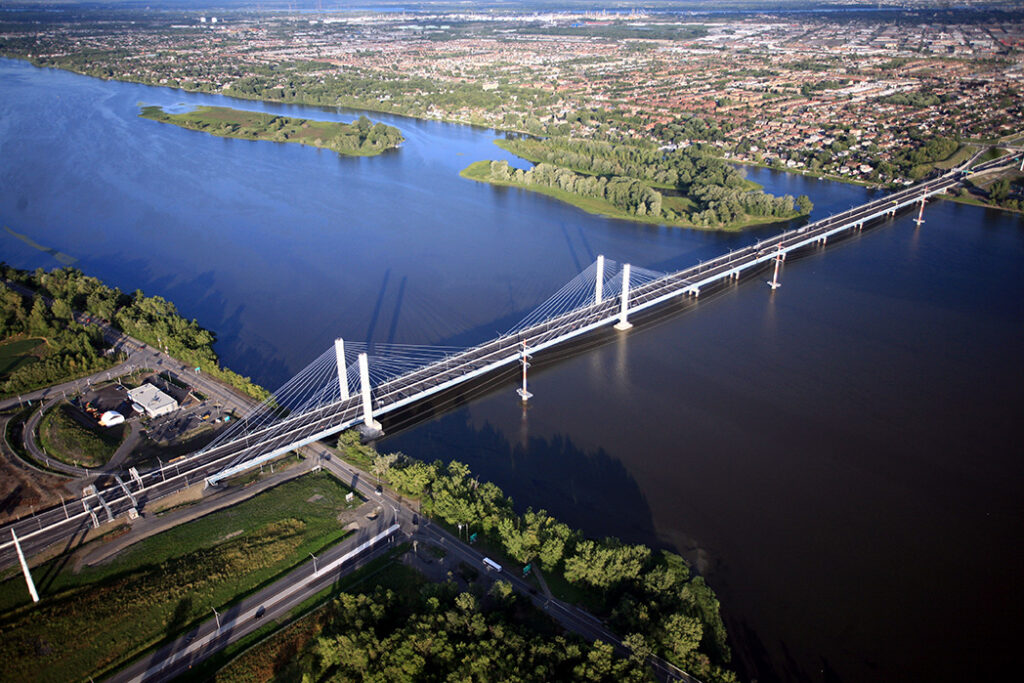
2006
Kiewit completes the final phase of a six-year contract for the Cartier Wind Energy project in Québec, providing cranes for the offloading and construction of windmills.
2007
Kiewit acquires Ganotec Inc.
2009
Kiewit begins work on the Froth Treatment Facility and Flare Silo at the Kearl Oil Sands in Fort McMurray, Alberta. The company maintains a long-standing involvement in the expansion phase.
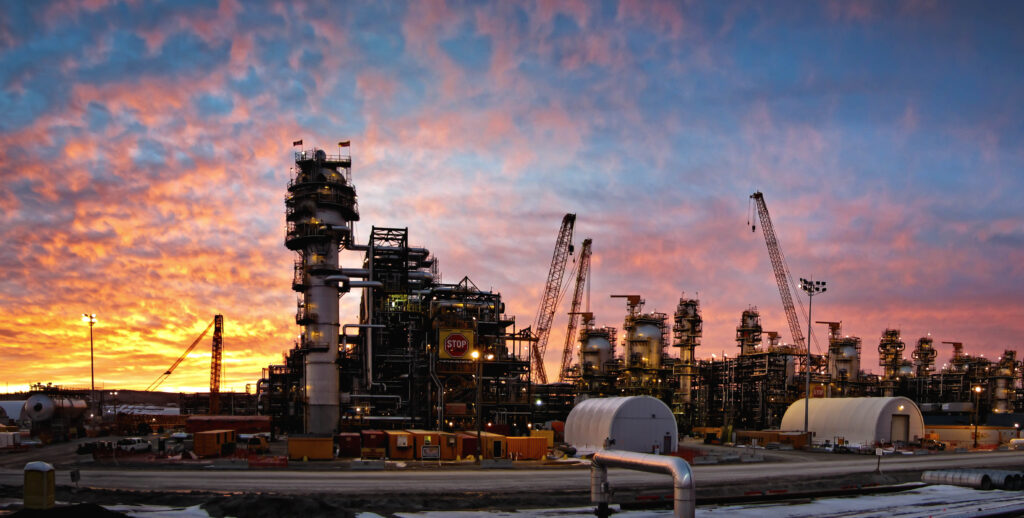
2009
Kiewit begins work on the design-build joint venture for the Port Mann/Highway 1 Improvement project, British Columbia’s largest transportation project at the time.
The work involves upgrading 37 kilometres of highway and 12 interchanges, centered on the construction of the 10-lane Port Mann Bridge — one of the widest bridges in the world — across the Fraser River. The project was completed in 2015.

2010
Kiewit constructs new and upgraded stations for the Lower Mattagami River project, one of the largest hydroelectric power generation initiatives in northern Ontario. Kiewit subsidiary Ganotec Inc. completes the electrical and mechanical scope for the balance of plant work.
2010
Kiewit-Kvaerner Contractors, a partnership between Kiewit and Kvaerner Newfoundland Ltd., designs, procures, constructs and installs the 600,000 tonne Hebron Gravity-Based Structure (GBS) in Bull Arm, Newfoundland. One of the world’s largest oil and gas projects, the GBS has the capacity to store 1.2 million barrels of oil and is designed to withstand the harsh ocean conditions of the North Atlantic.
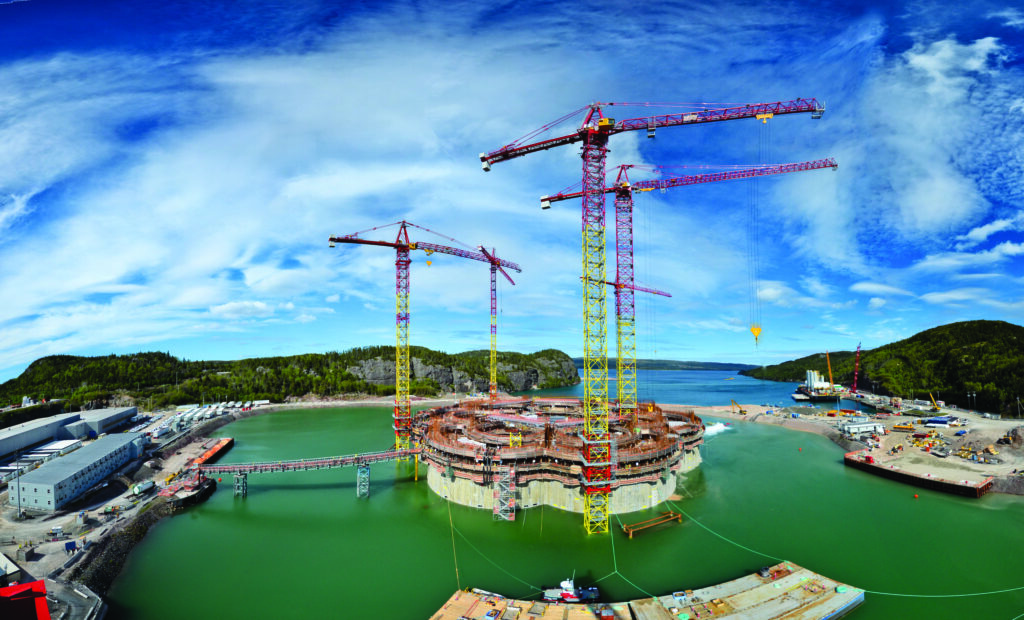
2012
Kiewit constructs two tunnels on the Toronto-York Spadina Subway Extension from the City of Toronto into York Region, the first 1,540 metres long and the second 1,185 metres long.
2012
The Ganotec, Maçonnerie Thibeault and Électricité Grimard joint venture constructs the AP60 Technology Pilot Plant, a 60,000-tonne-per-year aluminum smelting demonstration plant at Complexe Jonquière in Québec. Built for Rio Tinto Alcan, the first-of-its-kind pilot plant is designed to test and advance the company’s proprietary AP60 smelting technology. Ganotec performs mechanical and piping work, pot construction and major lifts.
2014
Ganotec Inc. partners on the Nabiye project near Cold Lake, Alberta, delivering seven crude oil tanks for one of the world’s largest heavy oil operations which uses thermal in situ recovery — a process that heats oil underground to make it easier to extract.
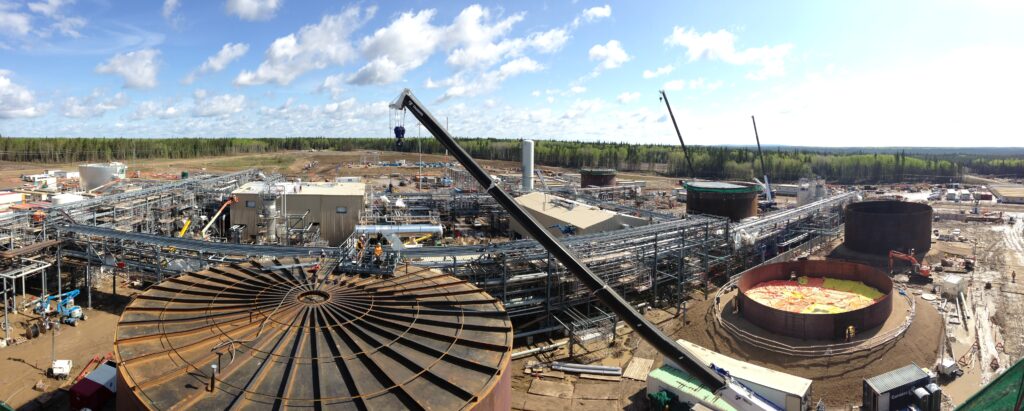
2014
The KPH Turcot partnership, consisting of Kiewit and Parsons, begins work on the design-build reconstruction of Montréal’s Turcot Interchange and three connecting interchanges.
The project relocates major highway lanes and active rail lines, using 3D imaging to plan complex work and incorporate more than 50 temporary detours. The project was completed in 2020.

2014
Kiewit begins work on the Waterloo Light Rail Transit system in Ontario, the largest infrastructure project in the region’s history.
2014
KBAC Constructors, a partnership between Kiewit, BMA Constructors and GJ Cahill, completes the Long Harbour Nickel Processing Plant in Newfoundland. One of the largest plants in the world to use a hydrometallurgical process, the facility refines 50,000 tons of nickel ore per year. KBAC installs the plant’s mechanical, piping, heating, ventilation, air conditioning, electrical and instrumentation systems.
2015
Kiewit completes the expansion of the Mayo B hydropower facility in the remote Yukon Territory, a key part of Yukon Energy Corporation’s plan to boost renewable energy and reduce diesel reliance. The project successfully triples the dam’s energy output from 5 megawatts to approximately 15 megawatts.
2016
Ganotec assists with completion of the Cochrane and Long Lake solar projects, part of Northland Power’s portfolio of four 10-megawatt Phase III ground-mounted solar projects in northern Ontario. The work supports 40 megawatts of renewable generation and includes projects with equity participation from Taykwa Tagamou Nation and Wahgoshig First Nation.
2018
Kiewit fabricates and performs on-site integration of 170 pipe-rack modules for Canada’s first integrated propane dehydrogenation and polypropylene complex in Strathcona County in Fort Saskatchewan, Alberta.
2019
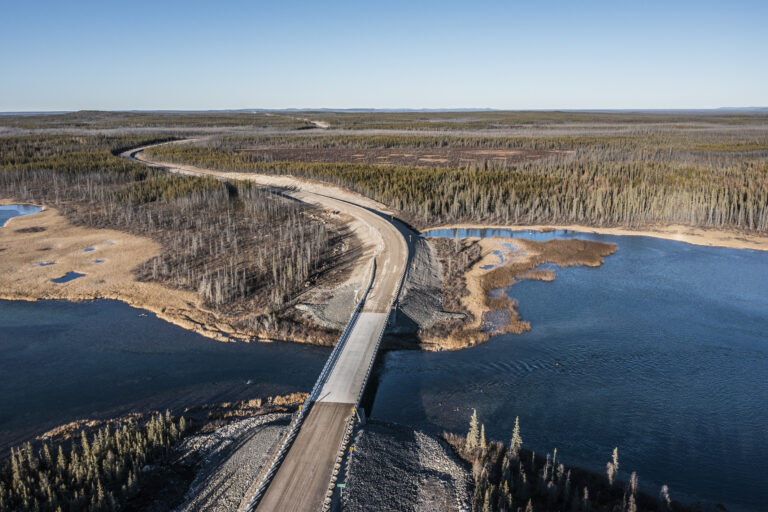
Work begins on the Tłįchǫ All-Season Road project. This 97-kilometre all-season gravel highway replaces a winter-only ice road and provides the remote community of Whatì in the Northwest Territories with safe, year-round access to essential services.
As project developer and design-builder, Kiewit works in partnership with the Tłįchǫ Government. The Tłįchǫ All-Season Road project includes four bridges and multiple water-crossing structures. The project also involves geotechnical work, drainage, traffic management and wildlife management during construction and operations.
2019
Kiewit begins early contractor involvement on the Cheekeye Debris Flow Barrier project, one of the world’s largest debris mitigation structures. Work officially begins in 2023 and continues into 2026. Upon completion, the barrier will protect more than 1,300 new homes and existing communities from catastrophic debris flows originating from Mount Garibaldi.
2019
Kiewit partners with Eurovia and Vinci to build the Ottawa Stage 2 Confederation Line in the nation’s capital. When completed, this project will provide Ottawa residents with an additional 27 kilometres of light rail access, 16 new stations and a light maintenance and storage facility.
2020
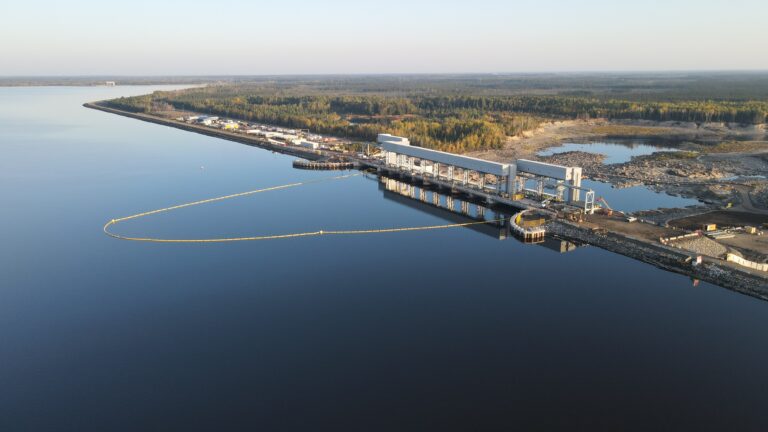
Kiewit begins work on the Little Long Dam Safety Project for Ontario Power Generation near Kapuskasing. Kiewit proposes and delivers an alternative engineering solution that integrates four additional gates into the existing structure. The final upgrades increase the dam’s discharge capacity to three times the amount of Niagara Falls and result in over $100 million in contracts awarded to Indigenous businesses.
2020
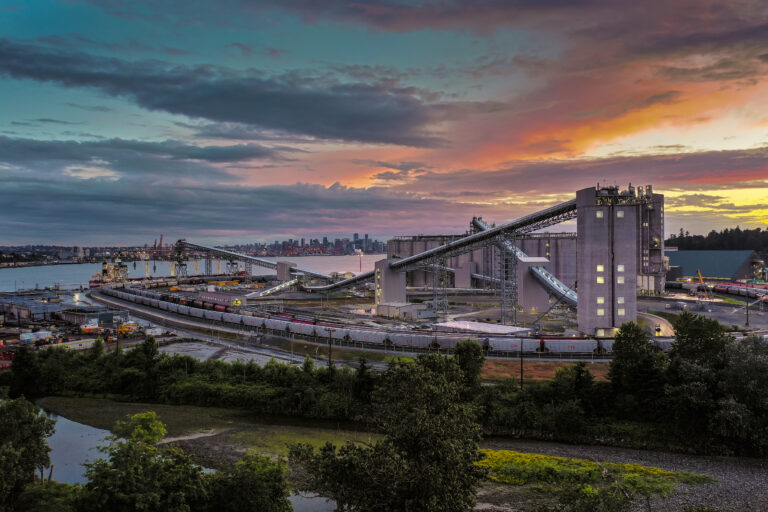
Kiewit completes the G3 Grain Export Terminal in North Vancouver, the first new grain export terminal at the port since the 1970s. Delivered under an engineering, procurement and construction contract, the project features 48 silos and a seven-mile rail loop track designed to unload three 150-car trains simultaneously while in continuous motion, drastically improving supply chain efficiency for Canadian agricultural exports. Work began on the project in 2016, and Kiewit self-performed about 80% of the work, accounting for more than 1 million direct work hours.
2021
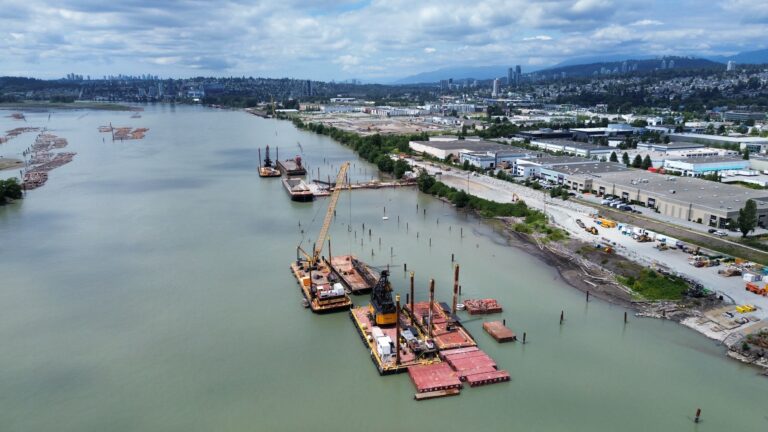
Kiewit begins planning the build-out of its industrial waterfront property along the Fraser River in Coquitlam, British Columbia, into a modern marine facility. The property was purchased in 2021, and upgrades to the site, which has been industrial since the 1800s, support future regional infrastructure projects and meet current environmental and engineering standards.
2021
Kiewit starts work on Spread 5B of the Trans Mountain Expansion Project, one of the most technically challenging sections of the pipeline, in the Coquihalla–Hope region of British Columbia. The approximately 85 kilometre segment crosses steep mountainous terrain and requires complex construction solutions, including extensive trenchless crossings, tunnelling and work in remote, environmentally sensitive areas.
2021
The Southwest Calgary Ring Road project, co-led by Kiewit Development Co. (KDC) using a design-build-finance-operate maintain (DBFOM) delivery model, is completed. This crucial link in Calgary’s 101-kilometre ring road system involved the construction of 13 miles of new six- and eight-lane divided highway, 14 interchanges, 47 bridges, a road flyover, railway crossing, culvert set, tunnel and three river crossings, significantly improving regional connectivity. Work began on the project in 2016.
2021
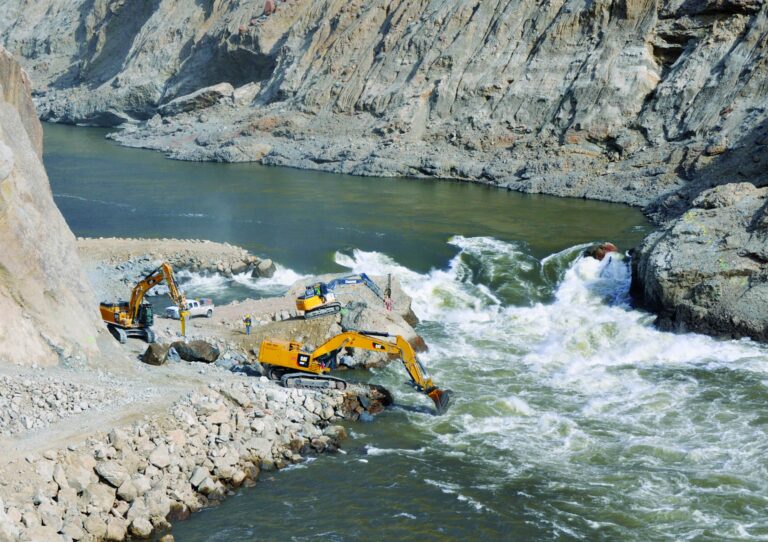
The Big Bar Salmon Habitat Restoration project is completed. After a massive landslide reshaped the area and brought fishing by local First Nations communities to a halt on the Fraser River in British Columbia, Kiewit was awarded an emergency contract to restore the salmon habitat. Despite extreme winter conditions in the remote canyon, Kiewit successfully removed 14,000 cubic metres of debris by building an 800-metre access road. The scope grew to include the construction of a technical fish ladder and a natural fishway, ultimately clearing the blockage, restoring fish passage and supporting salmon recovery.
2021
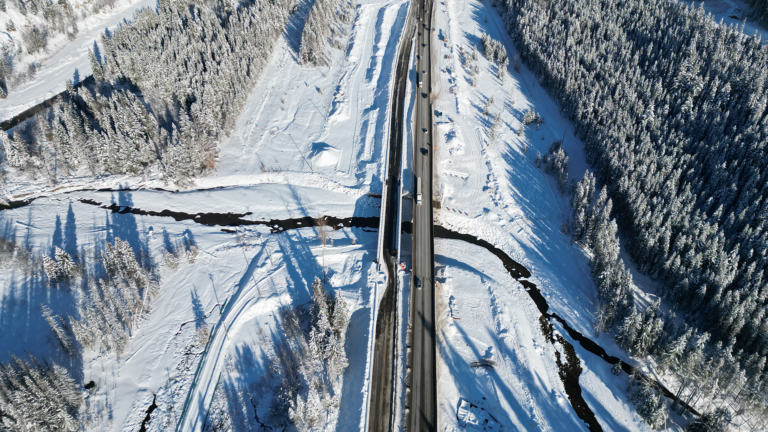
Severe rainfall triggers catastrophic flooding and landslides, crippling key transportation corridors across British Columbia, including the Coquihalla Highway. A 200-person Kiewit team mobilizes immediately to support emergency response and restore access.
In 2024, Kiewit returns as designer and joint venture constructor for Highway 5 under British Columbia’s first transportation alliance contract, delivering six permanent bridges under budget and ahead of schedule, with strong inclusion of local and Indigenous businesses. The project earns multiple engineering and construction awards, including Kiewit’s first Canadian engineering honour from the Transportation Association of Canada.
2022
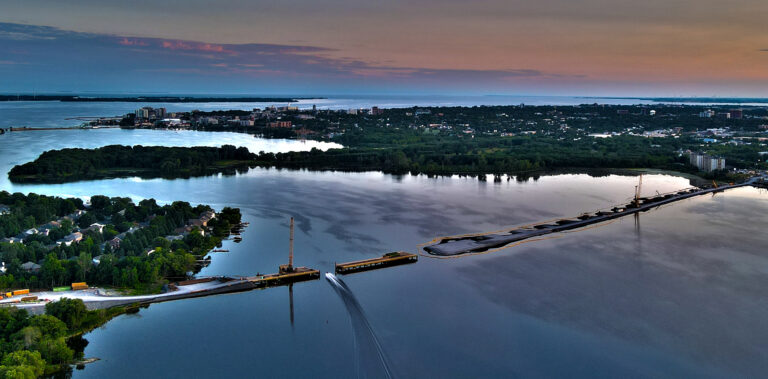
Kiewit completes construction of Waaban Crossing. This two-lane signature bridge, spanning 1.2 kilometres, includes a walking and biking path and connects the City of Kingston, Ontario, across the Cataraqui River. This project is the first linear infrastructure project in North America delivered under an integrated project delivery contract.
2022
After a two‑year development phase, Kiewit was selected to move forward with the Union Station Enhancement Project in Toronto, the first major infrastructure project in Canada to be procured using the alliance contracting model. Part of Metrolinx’s GO Expansion program, the project includes the expansion of rail, platforms, and below‑grade concourses at Union Station, North America’s second-busiest rail station.
2022
Kiewit begins work on the proposed Woodfibre LNG Project, a liquefied natural gas (LNG) facility southwest of Squamish, British Columbia, to produce 1.5 to 2.1 million tonnes of LNG per year for global export via marine vessels.
2023
Kiewit enters a master services agreement with Elk Valley Resources (EVR) to provide early contractor involvement, engineering, procurement and construction services for two water treatment facilities, part of EVR’s broader water treatment program. Completion is scheduled for 2026.
2024
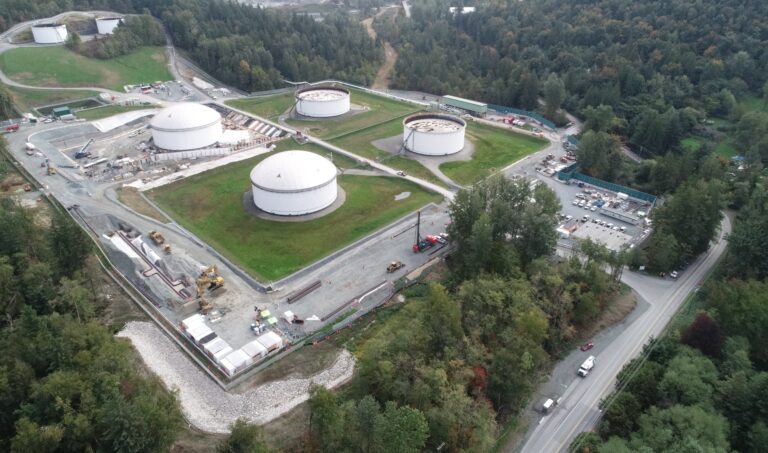
Kiewit completes construction of the Lower Mainland section of the Trans Mountain Expansion Project in British Columbia. As part of the Kiewit-Ledcor Trans Mountain Partnership (KLTP), Kiewit’s scope included Spread 7B, the submarine crossing of the Fraser River, Burnaby Mountain Tunnel, Burnaby Terminal, Sumas Terminal and Westridge Marine Terminal. Burnaby Mountain Tunnel was recognized in 2023 with the Canadian
Project of the Year Award by the Tunnelling Association of Canada.
2025
Kiewit begins work on the decarbonization and air separation unit package for Linde Engineering at Dow’s Fort Saskatchewan site in Alberta.
2025
Kiewit Nuclear Canada Corporation begins work on the Darlington New Nuclear Project as part of the integrated project delivery team for Ontario Power Generation. Kiewit’s role includes constructing North America’s first small modular reactor (SMR), a GE-Hitachi BWRX-300, and establishing the framework for future SMR deployments across Canada.
2025
Kiewit begins the North Runway Program at Vancouver International Airport, which includes a complete asphalt overlay, drainage improvements and installation of new LED runway edge lighting. Kiewit built the original North Runway in 1996.
2025
Kiewit completes the design and construction of the Nicomen River Bridge Replacement in British Columbia, replacing a structure damaged by 2021 floods. Delivered through an alliance model between Kiewit and the British Columbia Ministry of Transportation and Transit, the new two-lane bridge provides safer, more reliable travel.
2025
Kiewit marks 30 years of operations at Raglan Nickel Mine in Nunavik, northern Québec. This project showcases a successful, long-standing Indigenous partnership and Kiewit’s ability to sustain large-scale, continuous operations in remote Arctic environments.
2025
Kiewit is delivering the Dehk’è Frank Channel Bridge Replacement Project along Highway 3 in the Northwest Territories in partnership with the Tłįchǫ Nation. This project represents Kiewit’s second delivery with the Tłįchǫ Nation, involving the replacement of the existing bridge to improve safety and long‑term reliability in a remote northern environment.
2025
Kiewit returns to Mayo to deliver the Mayo Rock Slope Remediation and Surge Tank Replacement Project at the Mayo Hydro Facility in Mayo, Yukon, for Yukon Energy Corporation. The project includes stabilizing a crucial rock slope and replacing the MH0 surge tank, requiring specialized geotechnical construction methods in a remote northern environment.
2026
Kiewit is named one of Canada’s Best Workplaces by the Great Place to Work® Institute for the 16th year in a row. Based on employee feedback, the recognition reflects the strength of Kiewit’s workplace culture and the company’s commitment to its core values — People, Integrity, Excellence and Stewardship — demonstrated by employees across Canada each day.
“We are proud to continue being one of the best places to work,” said Patrick Lamarre, president of Kiewit Canada Group Inc. “Our culture is built on investing in our people and creating an environment where they can build meaningful careers. That includes developing young talent, creating opportunities across our engineering and construction business and fostering a forward-looking culture that embraces innovation and emerging technologies, including artificial intelligence. By investing in Canadian talent and emphasizing stewardship in everything we do, we strengthen our workforce and create lasting value for the clients and communities we proudly serve.”
2026
In 2026, Kiewit is awarded the Arlington Bridge deconstruction project in Winnipeg, strengthening the company’s presence in Manitoba.
The company is also awarded its first Canadian drinking water treatment project in Cranbrook, British Columbia.
85 Years in Canada
Kiewit celebrates 85 years of building in Canada. With a growing presence across regions and markets, the company continues to expand its capabilities and invest in the people who will lead the next era of work.
“Our history in Canada is defined by the trust we’ve earned and the relationships we’ve built,” said Alex Saltarelli, president, Kiewit Construction Services ULC. “We’re proud of the legacy behind us, and we’re focused on building the next chapter by maintaining strong partnerships, developing our people and delivering work that will serve communities for generations to come.”
Indigenous relationships
Canada is home to three distinct groups of Indigenous peoples: First Nations, Inuit and Métis, each with unique histories, languages and cultural practices.
Kiewit is committed to building and maintaining strong relationships with Indigenous communities through cultural understanding and economic, employment and training opportunities. All staff in Canada participate in annual Indigenous awareness training to better understand cultural perspectives, historical context and best practices for engagement.
One of Kiewit’s proudest accomplishments was the successful delivery of the Tłįcho All-Season Road in the Northwest Territories. The 97-kilometre highway replaced a winter-only ice road, providing the remote Tłįcho Nation community of Whatì with year-round access to essential services.
North Star Infrastructure, a partnership between Kiewit and the Tłįcho Government, along with the Government of Northwest Territories, received Canadian Council for Public-Private Partnership’s 2025 Gold Award in Environmental, Social and Governance, setting a benchmark for resilient, inclusive infrastructure in Canada. It was the first public-private partnership project with a First Nation equity partner in Canada, ensuring Indigenous participation and reinvestment of returns into the local community. The Tłįcho Kiewit General Partnership was also recently awarded a new project, the Dehk’è Frank Channel Bridge.
Partnerships like these have played a meaningful role in the company’s 85-year history in Canada and continue to shape how it delivers work across the country.
“We’re grateful for our longstanding relationships with Indigenous communities across Canada. From the Tłįcho Nation in the Northwest Territories to the Moose Cree First Nation in northern Ontario, the Inuit in northern Quebec and the Kitsumkalum First Nation on the west coast of British Columbia, Indigenous nations are a major part of Kiewit reaching our 85-year milestone in Canada. These partnerships strengthen our work and reflect who we are,” said Jean-Pierre Gauthier, senior vice president, Peter Kiewit Sons ULC.